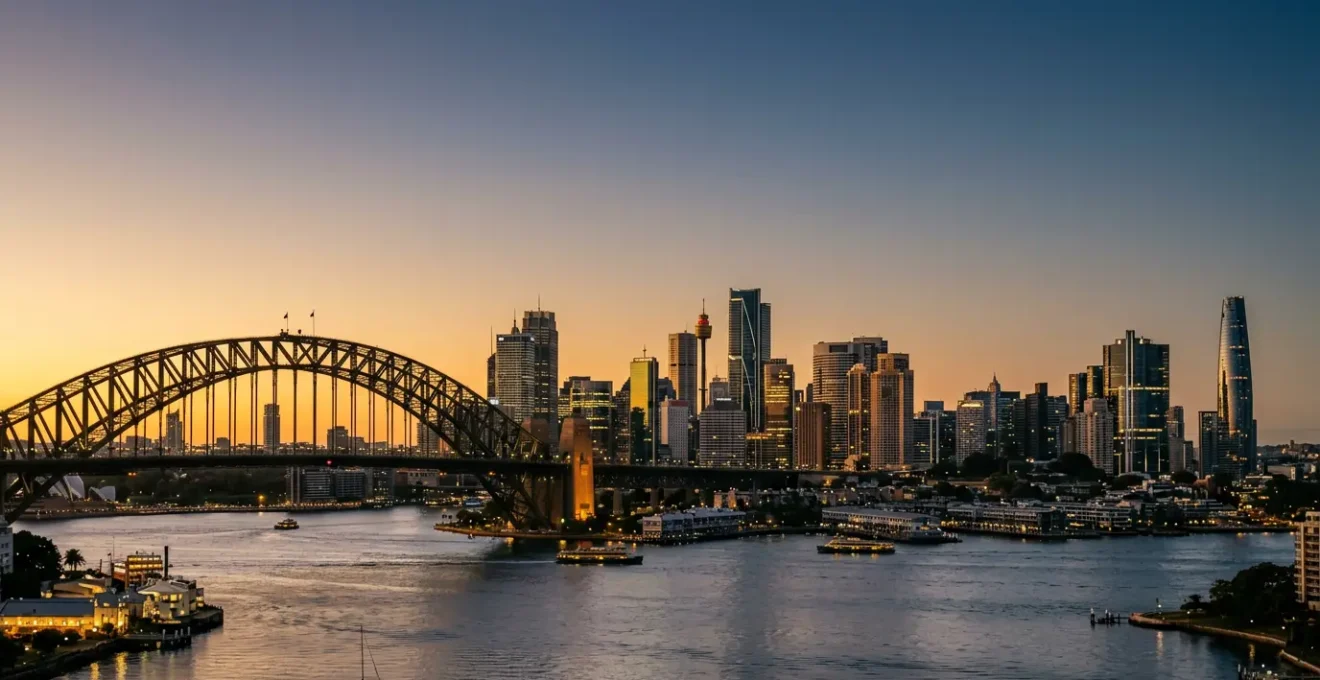
Sydney’s true value for a global corporation isn’t its prestigious address, but its complex operational ecosystem offering unique strategic advantages.
- The city’s unique time zone provides a “first look” advantage, allowing teams to act on European and US market data before Asian markets open.
- A dual-economy model, balancing the established CBD with the high-growth Western Aerotropolis, offers tailored solutions for cost, logistics, and market access.
Recommendation: Move beyond surface-level metrics. A granular analysis of Sydney’s distinct economic zones and talent micro-cultures is the key to building a resilient and highly profitable APAC hub.
For any multinational corporation planning an Asia-Pacific expansion, the question of the regional headquarters is paramount. Cities like Singapore and Hong Kong have long been the default choices, praised for their hyper-connectivity and established financial frameworks. Sydney is often mentioned in the same breath, but its strategic value is frequently reduced to generic praise for its stable economy and enviable lifestyle. This superficial analysis misses the point entirely and is insufficient for making a multi-million dollar investment decision.
The real conversation is not about whether Sydney is a good location, but about how to master its unique operational dynamics. For the discerning global leader, the city presents a complex but highly rewarding ecosystem. It offers a sophisticated form of strategic arbitrage—in time, talent, and territory—that is unavailable elsewhere. Understanding this ecosystem means looking beyond the postcard views of the Harbour Bridge and delving into the specifics of its talent pools, its transport challenges, and its most underestimated asset: its position on the clock.
This analysis moves beyond the platitudes to provide an operational playbook for senior executives. We will dissect the tangible premiums a Sydney address offers, explore concrete strategies for navigating its high-cost environment, and reveal why the city’s geography, from the CBD to its burgeoning western frontier, is a strategic asset to be leveraged for competitive advantage in the APAC region.
To navigate this complex but rewarding landscape, it’s essential to understand the specific dynamics at play. This article breaks down the core strategic pillars that define Sydney’s role as a premier business gateway, providing a clear framework for your decision-making process.
Summary: Why Sydney is the Premier Gateway for International Business
- Does a Sydney Address Still Carry a Premium for Asian Clients?
- How to Retain Staff in Sydney When Rent Is Eating Their Salary?
- Why Smart Businesses Are Moving West Before the New Airport Opens?
- Surry Hills vs CBD: Where Should Your Tech Startup Set Up Shop?
- How Sydney’s Transport Woes Impact Employee Productivity and How to Fix It?
- Why Sydney’s Time Zone Is the Secret Weapon for Trading Global Markets?
- How Much Does Class-A Office Space Cost in CBD vs Fringe Suburbs?
- How to Use Australia as a Launchpad for APAC Finance Operations?
Does a Sydney Address Still Carry a Premium for Asian Clients?
The prestige of a Sydney CBD address is not merely a matter of perception; it is a quantifiable asset. The city’s status as a regional command center is well-established, with data showing that over 600 multinational companies run their Asia Pacific operations from Sydney. This critical mass creates a powerful network effect, signaling stability, regulatory compliance, and a commitment to the region that resonates strongly with clients and partners across Asia. For a multinational corporation, planting your flag here is an immediate signal of credibility.
However, the premium extends beyond the address itself. It lies in the human capital. Sydney is home to a highly educated, multilingual Asian-Australian diaspora that acts as a crucial cultural and economic bridge. Research from the University of Sydney Business School highlights a new generation of entrepreneurs who are leveraging these deep-rooted connections. Unlike traditional models, these modern businesses are not just importing and exporting; they are operating in mainstream, high-tech markets across borders. This creates a sophisticated talent pool that can navigate the nuances of both Western and Asian business cultures, providing an unparalleled advantage for any firm looking to deepen its engagement with the APAC region. Having a Sydney office gives you direct access to this unique cultural and commercial expertise.
In essence, the premium is two-fold: the external credibility conferred by the address and the internal strategic capability provided by its unique talent pool. It’s a combination that is difficult to replicate in any other city in the region.
How to Retain Staff in Sydney When Rent Is Eating Their Salary?
Sydney’s high cost of living, particularly its notoriously expensive rental market, presents a significant challenge for employee retention. While competitive salaries are a baseline requirement, they are often not enough to secure long-term loyalty when a large portion of an employee’s income is consumed by housing. Smart businesses understand that the solution lies not in simply throwing more money at the problem, but in creating a superior and more holistic Employee Value Proposition (EVP) that addresses the unique pressures of Sydney life.
The key is to focus on benefits that directly mitigate the city’s pain points and leverage its lifestyle advantages. This means moving beyond standard perks and embracing a more creative, flexible, and supportive approach to employee well-being. This demonstrates a genuine understanding of your team’s daily challenges and actively helps them build a sustainable life in the city, fostering a deeper sense of loyalty that a simple pay rise cannot buy. The goal is to make the work-life blend so compelling that employees feel their overall quality of life is higher with you than it would be elsewhere, even with a slightly higher salary.
As seen in the lifestyle that Sydney affords, the most effective retention strategies are those that give back the most valuable commodities: time and financial peace of mind. By embedding these principles into your corporate culture, you transform the high cost of living from a retention risk into an opportunity to build a uniquely committed and resilient team. Offering solutions like flexible hours, commute support, and wellness packages shows you are investing in your employees as people, not just as resources.
Your Action Plan: Auditing Your Sydney Employee Value Proposition
- Financial Wellness Integration: List all current financial benefits. Are you offering access to certified financial planners to help staff manage Sydney’s high costs, not just salary?
- Commute & Flexibility Audit: Inventory your current work-from-home and flex-time policies. Map employee postcodes to identify high-stress commute corridors where satellite hubs or subsidized transport could have the most impact.
- Lifestyle & Culture Cohesion: Confront your stated company values with your actual budget allocation. Does your spending reflect a commitment to work-life balance, or is it all talk? (e.g., corporate sports memberships, paid wellness days).
- Benefit Mémorability: Survey your team on which perks are most valued versus which are generic. Identify the one unique, ‘surf-friendly’ style benefit that defines your culture and makes you stand out.
- Strategic Implementation Plan: Prioritize the top two initiatives that offer the highest impact for the lowest initial cost and create a 90-day rollout plan to demonstrate immediate commitment.
Why Smart Businesses Are Moving West Before the New Airport Opens?
While the allure of Sydney’s CBD is undeniable, the most forward-thinking global businesses are already executing a major strategic pivot: west. The development of the Western Sydney International (Nancy-Bird Walton) Airport is not just an infrastructure project; it is the catalyst for the creation of an entirely new economic hub. This region, known as the Western Sydney Aerotropolis, is poised to become a globally significant center for aerospace, defence, advanced manufacturing, and logistics. The scale of this transformation is staggering, with government data projecting the creation of 200,000 new jobs supported by massive investment.
Smart businesses are not waiting for the airport’s 2026 opening to make their move. They are securing a first-mover advantage by establishing a presence now, capitalizing on lower land and development costs before the inevitable price surge. The commitment from the NSW and Commonwealth Governments is ironclad, with over $25 billion already committed to the airport and its supporting transport infrastructure. The approval of the Bradfield City Centre Master Plan in September 2024 has provided a clear roadmap for this 11,200-hectare zone, de-risking investment and signaling a long-term vision.
A tangible example of this foresight is Singapore Airlines’ announcement in August 2024 to become the first international carrier to service the new airport. This move leverages the airport’s 24-hour curfew-free operations, a significant advantage over the existing Kingsford Smith Airport. For a multinational, this “dual-economy” strategy is compelling: maintain a prestigious client-facing office in the CBD while building out a new, cost-effective operational or logistics hub in the west. This is not about abandoning the CBD; it is about creating a more resilient and diversified operational footprint across the entire Sydney metropolitan area. Those who wait will be paying a premium to follow.
Surry Hills vs CBD: Where Should Your Tech Startup Set Up Shop?
For a tech company, the choice of location in Sydney is a strategic decision that goes far beyond mere cost per square meter. It is a declaration of identity and a primary filter for the type of talent you will attract. The two most prominent options, the corporate CBD and the creative hub of Surry Hills, represent two fundamentally different approaches to building a tech business.
The Sydney CBD offers a premium address, proximity to venture capital firms, and access to a deep pool of corporate-experienced tech talent. It’s the natural choice for FinTech, enterprise SaaS, or any scale-up looking to project an image of stability and attract seasoned professionals. Conversely, Surry Hills, with its vibrant café culture, warehouses-turned-offices, and dense network of startups, has a completely different gravity. It pulls in younger, more risk-tolerant talent—the developers, designers, and marketers who thrive on creative energy and collaboration.
As the Gray Dawes Travel Business Guide for 2025 notes, this choice is fundamental to your team’s DNA:
The CBD attracts corporate-experienced tech talent looking for stability and high salaries, while Surry Hills attracts younger, risk-taking talent. The choice of location is a primary filter for the type of team you will build.
– Gray Dawes Travel Business Guide, Sydney Business Traveller’s Guide 2025
The financial aspect reflects this cultural divide. While the CBD commands higher desk rates, the real decision is about what kind of company culture you are trying to build. Are you building a corporate-ready machine or a disruptive creative force? Your postcode will be your first and most powerful signal to the talent market. The choice of location is an active tool for talent filtration, not a passive line item on a budget.
How Sydney’s Transport Woes Impact Employee Productivity and How to Fix It?
Sydney’s public transport system, while extensive, faces significant capacity challenges, leading to crowded commutes that directly impact employee well-being and productivity. The morning rush hour, characterized by packed train platforms and congested roads, means that many employees arrive at the office already stressed and fatigued. This “commute drain” erodes focus, diminishes morale, and can contribute to higher rates of burnout and absenteeism. For a business, this is not just a human resources issue; it is a direct threat to operational efficiency.
Ignoring this daily reality is a strategic mistake. The frustration and unpredictability of the commute can be a significant factor in an employee’s decision to seek employment elsewhere. Proactive companies, however, are turning this challenge into a competitive advantage by implementing company-led solutions that acknowledge and mitigate the stress of getting to and from work. These initiatives send a powerful message that the company values its employees’ time and well-being beyond the confines of the office.
The solutions are not about replacing public infrastructure but about providing intelligent, flexible options that work around its peak-hour limitations. By offering alternatives, businesses can effectively “gift” time back to their employees, reducing stress and increasing engagement. These company-led transport solutions demonstrate a deep understanding of the local context and are a powerful tool for attracting and retaining top talent in a competitive market. Here are some of the most effective strategies being implemented by leading Sydney firms:
- Implement asynchronous work schedules with core collaboration hours (e.g., 10am-3pm) to allow staff to travel during less congested off-peak times.
- Provide private shuttle bus services from major transport interchanges like Central or North Sydney stations to reduce the stress of the “last-mile” commute.
- Establish corporate accounts with ride-sharing services to ensure staff can get home safely and efficiently after working late, removing a major barrier to project completion.
- Subsidize the purchase of e-bikes or offer secure bike parking and end-of-trip facilities to encourage healthy, flexible, and environmentally friendly commuting options.
- Create a network of satellite co-working spaces in key residential population centers (e.g., Parramatta, Chatswood, Sutherland) to drastically cut or eliminate commute times for a portion of the week.
Why Sydney’s Time Zone Is the Secret Weapon for Trading Global Markets?
On the surface, Sydney’s time zone (GMT+10/11) might seem isolating. In reality, for finance, trading, and global operations, it is a formidable strategic weapon. The city’s workday provides a unique bridge between the closing of North American markets and the opening of major Asian exchanges. This creates a “follow-the-sun” operational model that delivers a significant competitive edge.
The core of this advantage is what financial firms call the “First Look.” As highlighted by analysis from Business Events Sydney, teams based in Sydney can begin their day by analyzing and reacting to overnight developments in New York and London. Crucially, they can then position their strategies and execute trades several hours before markets open in Tokyo, Hong Kong, and Singapore. This window allows Sydney-based operations to set the tone for the Asian trading day, capitalizing on information and volatility while their regional competitors are still offline. At the end of the day, the overlap with the US West Coast allows for a seamless handover, completing the 24-hour cycle.
This strategic time-zone placement is a key reason for the city’s magnetic pull for international business, evidenced by a reported 20% year-on-year increase in corporate travelers, placing Sydney among the top 10 APAC destinations. This isn’t just about tourism; it reflects a growing recognition of the city’s fundamental role in the global business clock. For any multinational with 24/7 operations, from financial services to customer support and network operations, Sydney offers not just a location, but a temporal advantage that can be directly translated into market share and profitability.
How Much Does Class-A Office Space Cost in CBD vs Fringe Suburbs?
When evaluating Sydney for an APAC headquarters, understanding the nuances of the commercial real estate market is critical. A surface-level look at rental rates can be misleading; a sophisticated analysis requires a deep dive into the total cost of occupancy, which includes incentives, vacancy rates, and hidden costs that vary dramatically between the CBD and fringe suburbs.
In the heart of the city, Premium and A-Grade office spaces in the CBD command the highest rates, with Tenant CS market analysis from 2025 citing figures around $1,155 per square meter for Premium grade. While this figure seems high, it is often offset by significant landlord incentives—such as rent-free periods or contributions to fit-out costs—which can be as high as 35-40%. These incentives are a crucial negotiation point and can dramatically alter the effective rental cost.
The following table, drawing on data from Cushman & Wakefield, provides a more granular look at the total cost of occupancy, revealing the trade-offs between location, quality, and cost. It is essential for decision-makers to look beyond the “Net Face Rent” and consider the full picture.
| Location | Net Face Rent | Incentives | Vacancy Rate | Hidden Costs |
|---|---|---|---|---|
| Sydney CBD Premium | $1,449/sqm | 35.7% | 9.8% | High fit-out costs, premium parking |
| CBD A Grade | $970/sqm | 36.8% | 17.6% | Make-good clauses, management fees |
| North Sydney | $600-800/sqm | 40-45% | Mid-teens | Lower transport access costs |
| Parramatta | $450-600/sqm | 45-50% | Higher | Talent access limitations |
As the data illustrates, fringe locations like North Sydney and Parramatta offer substantially lower face rents and even higher incentives. However, this comes with potential trade-offs, such as access to specific talent pools or increased transport logistics. The decision is not simply about finding the cheapest option, but about finding the location that offers the optimal balance of cost, accessibility, and brand alignment for your specific business needs.
Key Takeaways
- Strategic Arbitrage: Sydney’s true value lies in leveraging its unique time zone, talent micro-cultures, and dual CBD/Western economies.
- Location as a Filter: Your office address is not just a cost; it’s a primary tool for attracting and filtering specific types of talent, from corporate-ready to creative-disruptive.
- The Future is West: The Western Sydney Aerotropolis represents the single largest growth opportunity, and first-movers are already securing strategic advantages.
How to Use Australia as a Launchpad for APAC Finance Operations?
Establishing a financial services operation in Australia is a strategic move that pays dividends far beyond the domestic market. The country’s robust regulatory environment, overseen by bodies like ASIC and APRA, acts as a globally respected benchmark. As noted by experts at Business Events Sydney, achieving licensure in Australia provides a “‘gold standard’ of compliance that builds immediate trust when expanding into less-regulated Asian markets.” This regulatory halo-effect is a powerful intangible asset, significantly de-risking subsequent entries into emerging APAC economies.
Within Australia, a nuanced strategy is key. Sydney is the undisputed hub for capital markets, investment banking, and M&A activity, while Melbourne has carved out a distinct specialisation in funds management and the colossal industry superannuation sector. A savvy multinational might establish its primary regulated entity in Sydney to leverage this “gold standard” and tap into its deal-making ecosystem, while building complementary capabilities elsewhere.
Sydney for capital markets and investment banking; Melbourne for funds management and industry superannuation funds. Getting licensed in Australia provides a ‘gold standard’ of compliance that builds immediate trust when expanding into less-regulated Asian markets.
– Business Events Sydney, BESydney Strategic Partner Network Report
This approach allows a company to project an image of unimpeachable regulatory strength across the entire region. It’s a launchpad strategy: establish your operational and compliance core in the fortress of the Australian market, then use that strength to project power and credibility into the high-growth, higher-risk markets across Asia. It transforms a compliance requirement into a potent offensive tool for market entry and client acquisition.
The evidence is clear. Sydney is not just a scenic city with a strong economy; it is a complex, multi-layered operational ecosystem. For the global corporation willing to look beyond the surface, it offers a powerful combination of market access, talent, and strategic leverage that is unmatched in the Asia-Pacific region.
The question is no longer whether to consider Sydney, but how to strategically deploy your assets to maximize its unique advantages. Your next move should be a detailed analysis of this operational ecosystem to build a bespoke strategy for your APAC expansion.