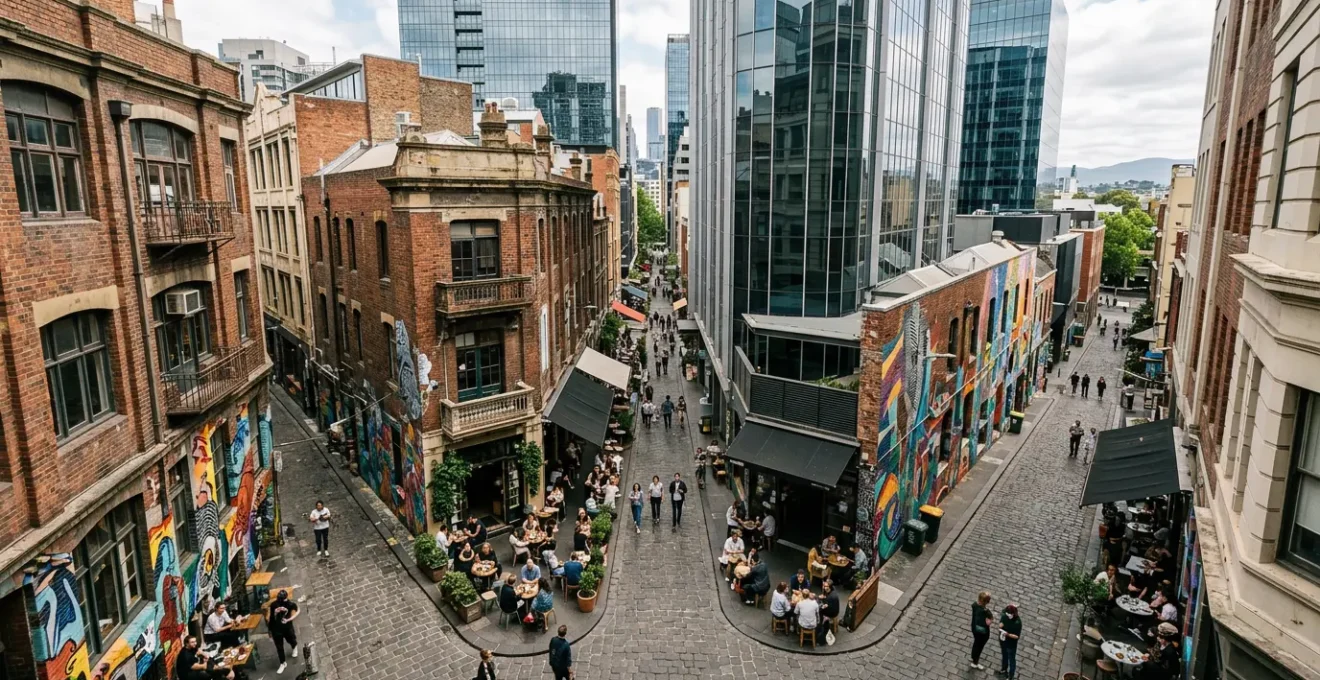
Melbourne’s creative energy is not just an atmosphere; it’s a tangible commercial infrastructure that provides the ideal proving ground for ambitious brands.
- The city’s informal “laneway boardroom” culture fosters genuine collaboration and faster deal-making.
- Its world-class port and multicultural consumer base offer unparalleled advantages for retail logistics and product innovation.
Recommendation: Leverage Melbourne’s symbiotic ecosystem of creative talent, government support, and engaged consumers to test, refine, and launch your brand before scaling nationally.
For any brand agency or fashion retailer weighing their options in Australia, the Sydney-Melbourne debate is a perennial one. Sydney glitters with corporate power and iconic landmarks, presenting an undeniable case for commercial presence. It’s the default, the seemingly obvious choice, built on established structures and a fast-paced, global rhythm. Conventional wisdom suggests that to play in the big leagues, you must be in the Harbour City.
This thinking, however, often overlooks a more nuanced, and perhaps more powerful, truth. It misses the potent alchemy brewing south of the border. But what if the true competitive edge for a creative or retail brand doesn’t lie in traditional corporate boardrooms, but in the bluestone laneways of a city that lives and breathes aesthetic-driven commerce? What if Melbourne’s famed culture isn’t just a lifestyle benefit, but a strategic business asset?
This analysis moves beyond the superficial clichés of coffee and art. We will demonstrate that Melbourne’s very fabric constitutes a unique cultural infrastructure—a dynamic, symbiotic ecosystem designed to nurture and amplify creative enterprises. This is not about choosing the “nicer” city; it’s about understanding which urban environment functions as a more effective commercial proving ground for brands that trade on originality, connection, and cultural relevance.
This guide unpacks the strategic advantages woven into Melbourne’s commercial DNA. We will explore how its unique culture translates into tangible opportunities, from its informal networking style to its powerful logistical backbone.
Summary: Unpacking Melbourne’s Commercial and Creative DNA
- Why Melbourne Deals Are Done in Laneways, Not Boardrooms?
- How to Leverage the Australian Open and Grand Prix for Corporate Hospitality?
- Why the Port of Melbourne Is Critical for Retail Importers?
- How Melbourne’s Multiculturalism Drives Innovation in Product Design?
- Is Melbourne Office Space Better Value Than Sydney in the Post-COVID Era?
- Cremorne vs Surry Hills: Which Tech Hub Fits Your Company Culture?
- Sydney or Melbourne: Which City Has the Best Rooftop Venue Culture?
- How to Tap into Government Grants for the Creative Industries?
Why Melbourne Deals Are Done in Laneways, Not Boardrooms?
The notion of the “laneway boardroom” is not a quaint metaphor; it’s the operational reality of Melbourne’s business culture. In a city where creativity is the dominant industry, the rigid formalities of corporate Sydney feel out of place. Here, relationships are the primary currency, and trust is built over a flat white in a hidden café, not across a mahogany desk. This informal environment isn’t about laziness; it’s about efficiency. It strips away the performative aspects of business, allowing for more direct, authentic, and ultimately, more productive conversations.
This culture is a direct reflection of the city’s economic engine. A collaborative spirit is essential in a market where designers, marketers, developers, and artists constantly intersect. This ecosystem is powered by a significant workforce; Victoria’s creative industries demonstrate a huge economic impact, with over 220,000 people employed in the sector state-wide. These aren’t just isolated freelancers; they form a dense, interconnected network where a chance encounter in Degraves Street can lead to a major collaboration.
For a brand agency or fashion retailer, this is a profound advantage. It means unparalleled access to talent and decision-makers. The barriers to entry are lower, and the gatekeepers are fewer. A compelling idea, shared with passion in the right setting, can travel through this network with incredible speed. It is a culture that rewards authenticity and vision, making it a fertile ground for brands that have a genuine story to tell. It’s a system built on mutual respect and shared creative values, a stark contrast to the transactional nature of more traditional business hubs.
How to Leverage the Australian Open and Grand Prix for Corporate Hospitality?
Melbourne’s major events calendar, headlined by the Australian Open and the Formula 1 Grand Prix, is more than just a source of civic pride; it’s a biannual epicentre of global business. For brands, these events are unparalleled platforms for corporate hospitality, but leveraging them effectively requires understanding the city’s unique social rhythm. Unlike in other cities where hospitality is confined to event-specific suites, in Melbourne, the entire city becomes the venue. The energy spills out from the arenas and into the laneways, restaurants, and rooftop bars.
The key is to think beyond the ticketed enclosure. The real networking happens in the periphery—the pre-event breakfasts, the post-match dinners, and the spontaneous gatherings in the CBD. This is where Melbourne’s thriving after-hours economy becomes a strategic asset. The city is engineered for this kind of activity, a fact reflected in its economic data. Even outside of major events, Melbourne’s evening trade is flourishing with record spending between 5 pm and 10 pm. During the Grand Slam or Grand Prix, this energy is amplified tenfold.
A successful hospitality strategy involves curating a uniquely “Melbourne” experience. This could mean booking a private dining room in a celebrated chef-hatted restaurant, securing a rooftop space with skyline views for cocktails, or even arranging an intimate gathering in a converted warehouse gallery in Fitzroy. The goal is to create a memorable, authentic experience that feels exclusive yet deeply connected to the city’s character. It’s about showing clients and partners that you understand the city’s cultural infrastructure and can offer them an insider’s access to its best-kept secrets, far from the crowded corporate tents.
Why the Port of Melbourne Is Critical for Retail Importers?
While Melbourne’s creative culture feeds the “why” of doing business, the Port of Melbourne provides the powerful, pragmatic “how.” For any fashion or retail brand, an efficient supply chain is not a competitive advantage; it’s a prerequisite for survival. The Port of Melbourne is the largest container and general cargo port in Australia, making it the undisputed logistical heart of the nation. For an importer, this scale translates directly into efficiency, frequency, and connectivity.
The sheer volume of trade is staggering. The critical importance of the Port of Melbourne is underscored by its handling of over $154 billion worth of trade in FY25, a record-breaking figure. This isn’t just abstract volume; it represents a finely tuned machine. The 2024-25 financial year saw total container throughput reach 3.39 million TEU, with full container imports growing by a robust 4.3%. This level of activity ensures more frequent shipping services from global manufacturing hubs, reducing lead times and improving inventory management for retailers.
This logistical supremacy is a cornerstone of Victoria’s A$455 billion Gross State Product. The port’s strategic location and advanced infrastructure mean that goods are cleared and moved into the national distribution network faster than through any other Australian port. For a fashion retailer, where speed-to-market is paramount, this efficiency is a game-changer. It means the latest collections arrive on shelves faster, enabling brands to be more responsive to fast-moving consumer trends and minimising the risk of holding obsolete stock. In essence, the port provides the robust, reliable backbone that allows creative retail visions to become commercial realities.
How Melbourne’s Multiculturalism Drives Innovation in Product Design?
Melbourne’s multiculturalism is its creative superpower. It’s a living laboratory of global tastes, trends, and traditions, providing an unparalleled source of inspiration for product designers and brand strategists. With residents from over 200 countries, the city is a mosaic of perspectives. This diversity isn’t just a social feature; it’s a dynamic commercial force that fuels a constant demand for new, nuanced, and culturally aware products. For a fashion or retail brand, this environment acts as a real-time focus group, offering deep insights into a global consumer base within a single city.
This fusion of cultures creates a uniquely receptive market for bold ideas. Consumers are more adventurous, open to experimentation, and sophisticated in their aesthetic sensibilities. This allows brands to test more daring designs and concepts than they might in a more homogenous market. The constant interplay of global influences—from Japanese minimalism and Scandinavian functionality to vibrant African textiles—creates a rich tapestry for designers to draw from. As the Startup Genome project highlights in its analysis:
Melbourne is a vibrant international city, renowned for its cultural diversity, global connectivity, and thriving innovation hubs.
– Startup Genome, Melbourne Ecosystem Report 2025
This creative melting pot doesn’t just foster local innovation; it has a proven track record of global commercial success. The ideas and products born from this environment have significant international appeal. This is evidenced by the approximately $1.4 billion in creative industry exports generated annually by Victoria. For a brand, tapping into this ecosystem means designing products that are not only innovative but also inherently global in their appeal, having been tested and refined in one of the world’s most diverse markets.
Is Melbourne Office Space Better Value Than Sydney in the Post-COVID Era?
The post-COVID recalibration of commercial real estate has reshaped the value proposition of Australia’s two largest cities. While Sydney remains the more expensive market in absolute terms, Melbourne now presents a compelling argument for superior “value.” This isn’t simply about a lower price per square metre; it’s about the quality of the environment and the vibrancy of the ecosystem that a commercial lease buys you into. Melbourne’s CBD has shown remarkable resilience, and its strength is evident in the fact that it boasts the lowest CBD retail vacancy rate in the country, indicating a thriving, active city core that attracts foot traffic and talent.
For a creative agency or fashion brand, the “value” of an office is measured by its ability to attract and retain top talent and immerse the business in a creative milieu. Melbourne’s office precincts, from the CBD to creative hubs like Collingwood and Cremorne, are interwoven with the city’s cultural fabric. This proximity to galleries, cafes, and independent retail creates a more desirable work-life environment than Sydney’s more monolithic corporate districts.
A direct comparison of the two cities’ startup ecosystems, as detailed in a recent analysis, reveals the nuanced differences in their economic structures. While Sydney’s ecosystem is larger in overall valuation, Melbourne’s focus on creative tech and B2B SaaS aligns perfectly with the needs of brand and design-led businesses.
This comparative data, sourced from a recent analysis of Australia’s startup landscape, highlights the distinct characters of each city’s commercial environment.
| Metric | Melbourne | Sydney |
|---|---|---|
| Ecosystem Value | US$18 billion | US$55 billion |
| Startup Growth Rate | +22.8% (2025) | Data not specified |
| Global Ranking | #42 | Higher (estimated #20-30) |
| Focus Areas | Creative, Tech, B2B SaaS | Fintech, B2C, Media Tech |
Ultimately, while a Sydney address may carry a certain prestige, a Melbourne office offers access to a more tailored, creative-centric ecosystem at a more sustainable cost. In the post-COVID era, this strategic blend of affordability, lifestyle, and industry alignment represents a smarter definition of value.
Cremorne vs Surry Hills: Which Tech Hub Fits Your Company Culture?
The choice between Melbourne’s Cremorne and Sydney’s Surry Hills is a microcosm of the broader decision between the two cities. Both are celebrated as epicentres of tech and creativity, but they embody distinctly different cultures. Surry Hills, with its proximity to the CBD and media giants, has a polished, agency-driven feel. It’s fast, slick, and deeply integrated into Sydney’s corporate world. Cremorne, by contrast, feels more like a dedicated, self-contained campus for innovation. It’s a gritty, industrial-chic neighbourhood that has been organically colonized by some of Australia’s most successful scale-ups.
The architecture tells the story: where Surry Hills has terraces and slick office blocks, Cremorne has converted warehouses and repurposed industrial buildings. This aesthetic fosters a culture of building, making, and experimentation. It’s less about the pitch and more about the product. This environment has nurtured a specific breed of company, with Melbourne-born successes like Culture Amp, Envato, and Airwallex demonstrating that disciplined growth and early traction are valued more highly than the initial funding splash—a key cultural differentiator.
For a brand or fashion-tech company, the question is one of cultural alignment. Do you thrive in a high-gloss, networked agency environment (Surry Hills), or in a head-down, product-focused builder community (Cremorne)? Cremorne offers a unique density of tech talent and a palpable sense of shared purpose. The entire suburb functions as a collaborative workspace, with ideas and talent flowing freely between the major tenants like SEEK, REA Group, and MYOB. It’s an ecosystem that feels more like Silicon Valley in its early, garage-centric days—a place where what you build matters more than who you know.
Sydney or Melbourne: Which City Has the Best Rooftop Venue Culture?
On the surface, both Sydney and Melbourne boast impressive rooftop venues. Sydney has the spectacular harbour views, a powerful and undeniable draw. However, Melbourne’s rooftop culture is arguably more diverse, integrated, and central to the city’s social and business fabric. It’s less about a single, iconic view and more about a rich tapestry of experiences, from hidden cocktail bars atop heritage buildings to sprawling, plant-filled spaces with 360-degree city panoramas.
Melbourne’s advantage lies in its density and accessibility. The city’s compact grid means that a multitude of world-class rooftop venues are within a short walk of each other, creating a dynamic and fluid nightlife circuit. This culture isn’t just for weekends; it’s an extension of the workday, serving as the default location for after-work drinks, client meetings, and industry networking. The vibrancy of this scene is a powerful economic driver, with Melbourne’s nighttime economy driving significant activity, seeing daily spending exceed $40 million on multiple days in late 2024.
Furthermore, Melbourne’s notoriously variable weather has ironically fuelled innovation in venue design. Most top-tier rooftops feature sophisticated retractable awnings and heating systems, making them true year-round destinations. This reliability is crucial for business planning. While a Sydney rooftop might be a gamble outside of summer, a Melbourne venue can be booked for a corporate event in July with confidence. This all-weather functionality, combined with the sheer variety of styles—from the ultra-chic to the casually cool—gives Melbourne’s rooftop scene a depth and utility that is hard to match. It’s a culture built for consistent use, not just for special occasions.
Key Takeaways
- Melbourne’s business culture prioritizes collaboration and authenticity over corporate formality, fostering faster, more genuine connections.
- The city acts as a ‘commercial proving ground’, where a diverse consumer base and creative ecosystem allow brands to test and refine products.
- Tangible assets like the Port of Melbourne and targeted government grants provide a robust infrastructure for retail and creative enterprises to scale.
How to Tap into Government Grants for the Creative Industries?
A defining feature of Melbourne’s commercial ecosystem is the proactive and substantial support offered by the state government. This goes far beyond rhetoric, manifesting in a suite of well-funded programs designed to de-risk innovation and fuel growth in the creative and tech sectors. For a new or expanding brand, this access to non-dilutive funding is a massive strategic advantage, providing crucial runway during the critical early stages. The cornerstone of this support is LaunchVic, the state’s startup agency.
The government’s commitment is tangible and significant. LaunchVic’s programs are backed by serious investment, with its support for the startup ecosystem including a $40 million allocation over four years in the 2024-25 State Budget. This funding supports everything from pre-accelerator programs for idea-stage ventures to grants that help scale-ups expand into global markets. Unlike broad, nationwide programs, these funds are specifically targeted at nurturing the industries that form the core of Melbourne’s economy, including fashion, design, and creative tech.
Successfully navigating this landscape requires a strategic approach. It’s not about a single grant application, but about layering multiple sources of funding and building momentum. The most successful applicants are those who can clearly articulate how their venture aligns with the government’s priorities of job creation, innovation, and community impact. Using these grants is not just about the cash; it’s a powerful form of validation that can attract further private investment.
Action Plan: Your Strategic Grant Application Framework
- Start with LaunchVic’s pre-accelerator programs for initial validation, mentorship, and to get on the government’s radar.
- Layer multiple funding sources by exploring opportunities at the local council, state (Creative Victoria), and federal levels.
- Demonstrate clear community impact and explicitly align your project with stated government innovation and economic priorities.
- Leverage initial, smaller grant wins as crucial credibility signals to attract the attention of private angel investors and venture capital.
- Treat acquittal reports not as a chore, but as a strategic opportunity to build a compelling case for subsequent, larger funding rounds.
By treating the grant system as an integral part of their capital strategy, brands can significantly accelerate their growth trajectory, using public funds as a catalyst for private-sector success. This symbiotic relationship between government and enterprise is a hallmark of the Melbourne model.
For a brand that thrives on creativity, community, and authenticity, the choice becomes clear. Melbourne is not merely a location; it’s an active partner. To build a brand with cultural resonance, the next logical step is to immerse yourself in this ecosystem and explore the tailored support available to bring your vision to life.