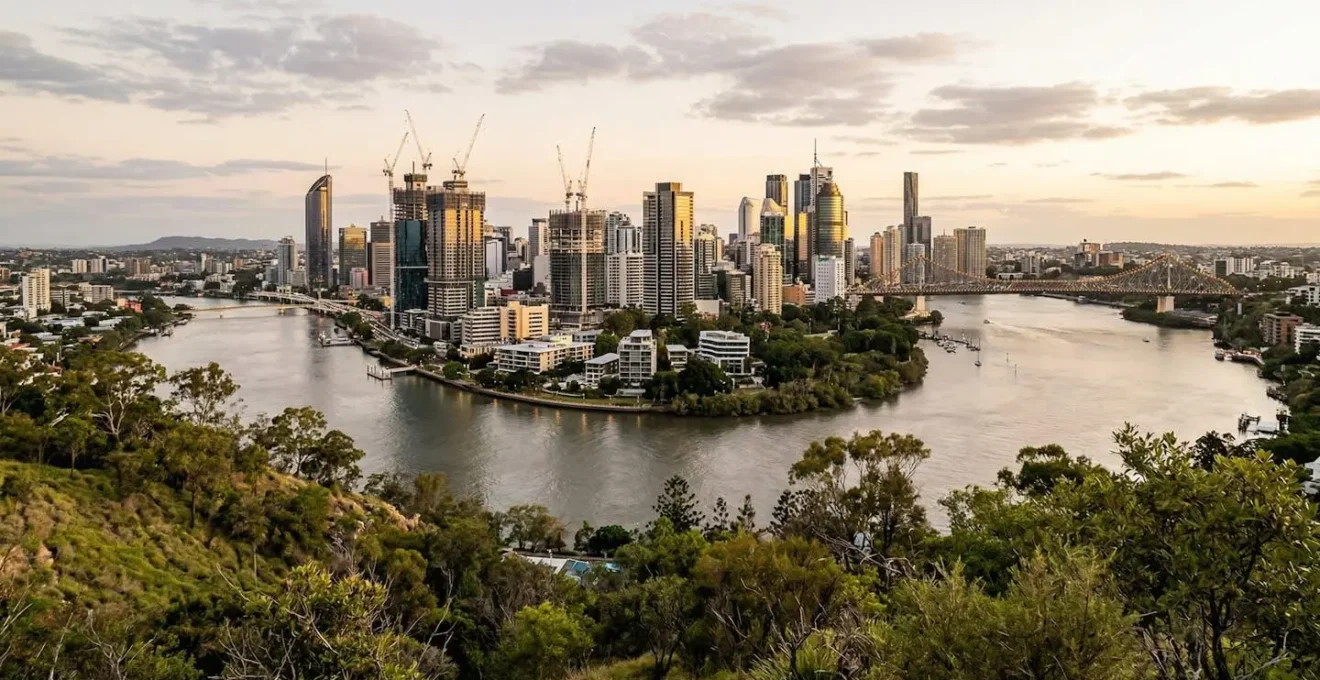
Viewing Brisbane’s growth solely through the lens of the 2032 Olympics is a strategic mistake; the real opportunity lies in the permanent, resilient urban ecosystem being built today.
- Massive infrastructure investment like the Cross River Rail is creating a hyper-connected CBD, not just temporary venues, fundamentally changing business accessibility.
- A “talent gravity” effect, combined with significantly lower operational costs than Sydney or Melbourne, creates a sustainable, long-term business advantage.
Recommendation: The smartest move is to invest not in the ‘Olympic hype’, but in the long-term operational and lifestyle infrastructure that will define Brisbane for decades to come.
The global spotlight is turning towards Brisbane, and the narrative seems simple: a 2032 Olympic boom is on the horizon. For the savvy investor, however, fixating on the Games is like watching the fireworks and ignoring the construction of the rocket. The real story isn’t a short-term sprint for Olympic gold, but the meticulous creation of Australia’s next great economic and lifestyle hub. While others chase speculative property flips based on event dates, the visionary investor looks at the decade-long runway and sees something far more valuable: a city being systematically upgraded into a resilient, hyper-connected, and talent-rich urban ecosystem.
Most analyses will offer familiar advice: buy near a stadium or invest in tourism. This approach misses the fundamental shift. The true opportunity lies not in what the Olympics will bring to Brisbane, but in what Brisbane is already becoming. The city is engineering a future where infrastructure, talent mobility, operational costs, and even climate resilience are not separate considerations, but interconnected components of a single, powerful growth engine. This isn’t about betting on a ten-day event; it’s about buying into a ten-year transformation. This article will deconstruct that transformation, revealing the strategic entry points and sustainable advantages that lie far beyond the finish line.
This comprehensive forecast will guide you through the interconnected layers of Brisbane’s growth, providing a clear roadmap for capitalizing on this decade-long opportunity. The following sections break down the key pillars of this new urban ecosystem.
Summary: Why Brisbane is the Ultimate 10-Year Investment Playbook
- How the Cross River Rail Will Change CBD Accessibility for Business?
- Why Talent Is Moving North and How Your Business Can Follow?
- Brisbane vs Sydney: Comparing the True Cost of Operations?
- Where Are the Hotel and Hospitality Gaps in the Pre-Olympic Market?
- How to Flood-Proof Your Brisbane Business Operations?
- How to Squeeze the Great Barrier Reef into a Brisbane Business Trip?
- Which State Government Offers the Best Grants for Foreign Investors?
- Sydney, Melbourne, or Brisbane: Where Should You Establish Your HQ?
How the Cross River Rail Will Change CBD Accessibility for Business?
The Cross River Rail is not just another transport project; it’s the future central nervous system of Brisbane’s business district. For investors, its impact must be viewed as a fundamental re-engineering of time and space within the city. By tunneling under the Brisbane River and the CBD, it resolves the city’s primary transport bottleneck, effectively creating a new, more efficient geography for commerce. This project will unlock previously undervalued commercial pockets and create a synergistic growth effect, where the value of one location is amplified by its seamless connection to others.
The most immediate and tangible benefit is the radical reduction in commute times, which directly translates to increased productivity and a larger accessible talent pool. Albert Street Station, the first new CBD station in over 120 years, is a prime example. Projected to serve 67,000 passengers daily by 2036, it will become a major hub connecting the parliamentary precinct, Queen’s Wharf, and QUT’s Gardens Point campus. This isn’t just about moving people; it’s about creating a high-density, highly-connected commercial ecosystem where meetings, collaborations, and business operations flow with unprecedented efficiency. The investment thesis is clear: property and businesses located along this new artery will benefit from a permanent and escalating accessibility premium.
The following table illustrates the dramatic time savings, which are a direct proxy for increased commercial efficiency and locational value.
| Destination | Current Journey Time | Time Saved | Key Benefit |
|---|---|---|---|
| Southern CBD | 25+ mins (including walk) | 15 minutes | Direct station access |
| The Gabba | 40+ mins (bus/walk) | 20 minutes | Direct underground station |
| RBWH Hospital | 25 mins (walk from stations) | 10 minutes | Closer station access |
Ultimately, investing with an understanding of the Cross River Rail’s impact is about skating to where the puck is going, securing assets that will become central and prime as the city’s new circulatory system comes fully online.
Why Talent Is Moving North and How Your Business Can Follow?
A powerful “talent gravity” is pulling Australia’s brightest minds towards Brisbane. This is not a temporary trend but a structural shift driven by a potent combination of career opportunity and unparalleled lifestyle. While Sydney and Melbourne grapple with affordability crises and saturated markets, Brisbane offers a compelling proposition: a dynamic, growing economy without the personal and professional compromises. For businesses, this migration represents the single most valuable resource: access to a growing, motivated, and highly skilled workforce.
This influx is particularly pronounced in high-growth, future-focused industries. The LinkedIn’s 2024 Jobs on the Rise report shows that Brisbane is a top hiring location for 3 of the 25 fastest-growing roles in Australia, indicating a critical mass of opportunity in emerging sectors. This is creating a virtuous cycle: innovative companies are drawn by the talent, which in turn attracts more talent. As the AppInventiv Tech Report highlights, “Brisbane is home to Go1, already a unicorn in the EdTech space, proving the market potential”. To follow the talent, businesses must create environments that align with this new paradigm: flexible, tech-enabled workspaces that integrate with the city’s vibrant, outdoor-oriented culture. The war for talent will be won not just with salaries, but with a superior quality of life, an area where Brisbane has a decisive and growing advantage.
The city’s professional landscape is rapidly evolving, with modern, collaborative spaces becoming the norm, reflecting a work culture that is both ambitious and balanced.
This image captures the essence of Brisbane’s new professional scene: diverse, energetic, and set against a backdrop that seamlessly blends urban ambition with a subtropical lifestyle. The key is to build a business that is not just *in* Brisbane, but *of* Brisbane, embracing the talent gravity that is reshaping Australia’s corporate landscape.
For investors, this means the most valuable assets will be those that cater to this new class of professionals, whether through innovative office designs, build-to-rent projects, or services that enhance the work-life blend.
Brisbane vs Sydney: Comparing the True Cost of Operations?
For decades, the choice of an Australian headquarters often defaulted to Sydney or Melbourne. This is no longer the case. A hard-nosed analysis of operational costs reveals Brisbane’s emergence as the undisputed smart-money option. The comparison goes far beyond simple rent-per-square-metre; it encompasses a holistic view of business expenditure, including salaries, commercial overheads, and access to growth incentives. While competitors face escalating costs and diminishing returns, Brisbane offers a “growth-at-a-reasonable-price” proposition that directly impacts the bottom line.
The economic foundation is robust and expanding. Brisbane’s flourishing economy, as reported by Posapt, is currently valued at $181 billion and projected to reach $239 billion by 2041. This trajectory is fueled by a significant cost advantage. Commercial rental rates are substantially lower than in the southern capitals, allowing businesses to secure premium office space for a fraction of the cost. This frees up capital for investment in talent, technology, and market expansion. Furthermore, while the talent is high-calibre, salary expectations are more grounded, enabling companies to build elite teams without the crippling payroll overheads seen elsewhere. This blend of a booming economy and a manageable cost base creates a powerful and sustainable competitive edge for any business establishing operations in the city.
This financial advantage is not an accident but a result of strategic planning and a pro-business environment. The city’s infrastructure and regulatory framework are designed to support growth, creating a fertile ground for both established corporations and ambitious startups. The true cost of operations is no longer just a line item on a spreadsheet; it’s a strategic weapon, and Brisbane is handing it to those visionary enough to see the opportunity.
In essence, choosing Brisbane is a calculated move to lower risk, increase operational leverage, and position a business for a decade of profitable growth in a market that is still on an upward curve.
Where Are the Hotel and Hospitality Gaps in the Pre-Olympic Market?
With the world’s attention turning to Brisbane, a surface-level analysis suggests a simple strategy: build more hotels. However, the visionary investor sees a more nuanced and profitable picture. The real gap in the pre-Olympic market is not in the quantity of rooms, but in the quality and specificity of the experience. While major projects like Queen’s Wharf are adding thousands of rooms, they primarily cater to the mass market. The opportunity for outsized returns lies in the underserved niches: ultra-luxury, wellness-focused retreats, tech-integrated business travel, and hyper-local, boutique experiences.
The scale of the incoming wave is staggering. A CBRE forecast suggests Queensland could see 4.3 million additional international arrivals between 2026 and 2032. This influx will include not just standard tourists, but high-net-worth individuals, corporate delegations, and specialized media—groups who demand more than a generic hotel room. They seek experiences that are memorable, efficient, and seamlessly integrated with their objectives. An executive might need a hotel with broadcast-quality video conferencing facilities, while a wellness-focused visitor might seek a property with integrated spa services and biophilic design. According to CBRE’s analysis of the existing infrastructure, while the 51,900 rooms across Brisbane, Gold, and Sunshine Coasts are sufficient in number, they lack this crucial diversity.
The strategic play is to develop properties that tell a story and serve a specific, high-value demographic. This could be a small, art-filled hotel in New Farm, a ‘bleisure’-focused aparthotel in South Bank that combines work and leisure facilities, or a high-tech ‘recovery’ pod hotel for athletes and executives in the CBD. The hospitality gap isn’t a deficit of beds, but a deficit of imagination. Investors who can fill this void with unique, targeted concepts will capture the most lucrative segment of the pre-Olympic and post-Olympic market, building brands that endure long after the closing ceremony.
The future of Brisbane hospitality is not about building bigger; it’s about building smarter, creating destinations that become an indispensable part of the visitor’s journey.
How to Flood-Proof Your Brisbane Business Operations?
For any investor with a decade-long horizon, addressing Brisbane’s historical flood risk is not a matter of ‘if’, but ‘how’. However, the visionary sees this not as a liability to be avoided, but as an opportunity to build a “resilience premium” into their assets. The future of smart investment in Brisbane lies in creating or acquiring operations that are not just flood-resistant, but demonstrably flood-proof. This resilience will become a key differentiator, attracting premium tenants, ensuring business continuity, and commanding higher valuations in a climate-aware market.
Modern engineering and digital infrastructure have transformed this challenge. The focus has shifted from post-event recovery to pre-emptive design. This involves physical adaptations, such as elevated building designs, the use of non-porous ground-floor materials, and raised electrical systems. But the true revolution is in operational resilience. This means decentralized data infrastructure with robust cloud-based redundancy, geographically diversified supply chains within Queensland, and mandatory remote-first crisis protocols that allow a business to function seamlessly, even if a physical location is temporarily inaccessible. This approach turns a potential threat into a strategic advantage, guaranteeing operational uptime and security for clients and stakeholders.
This focus on resilience is not just a defensive measure; it’s an emerging market in itself. Businesses that specialize in climate adaptation consulting, resilient construction, and continuity-as-a-service are poised for explosive growth, supported by a city that actively promotes and rewards such innovation.
Investing in resilient infrastructure is the ultimate long-term play, creating assets that are not only protected from risk but are actively sought after *because* of their certified resilience. Below is a checklist for auditing and implementing these strategies.
Action Plan: Auditing Your Business Resilience in Brisbane
- Assess Physical Vulnerability: Identify all critical equipment and infrastructure on ground floors and develop a plan for elevation or relocation.
- Review Data Infrastructure: Confirm that all critical data has cloud-based redundancy and test your remote access protocols under crisis simulation.
- Map Supply Chain Dependencies: Identify single points of failure in your supply chain and establish alternative suppliers in different geographic locations within the region.
- Develop Crisis Protocols: Create and drill a mandatory remote-first continuity plan that can be activated instantly, detailing communication channels and responsibilities.
- Explore Adaptation Opportunities: Evaluate how your core business can pivot to offer resilience-related services, turning a risk management strategy into a revenue stream.
By embedding this resilience premium into your investment strategy, you are not just mitigating risk; you are building the most valuable and sought-after assets for Brisbane’s next chapter.
How to Squeeze the Great Barrier Reef into a Brisbane Business Trip?
For the time-poor executive, Brisbane offers a unique and powerful value proposition that its southern rivals cannot match: it is the only major capital city that doubles as a practical gateway to the Great Barrier Reef. This transforms the standard business trip into a potential “bleisure” (business + leisure) experience of a lifetime. The ability to tack on a world-class nature excursion is a significant differentiator, enhancing the city’s appeal for hosting international conferences, corporate retreats, and high-level negotiations. It’s a soft power asset that translates into hard commercial benefits.
The key is efficiency. Savvy operators are leveraging Brisbane’s proximity to the less-crowded, pristine Southern Great Barrier Reef. As Brisbane’s Economic Development Agency notes, the city serves as a launchpad to exclusive island destinations like Lady Elliot and Heron Island. These are accessible via short flights, allowing a premium reef experience to be condensed into a weekend or even a single day. This logistical advantage is a game-changer. Imagine closing a deal on a Friday afternoon and snorkeling over vibrant coral on Saturday morning. This is the kind of experience that builds lasting business relationships and elevates a company’s prestige.
The “Reef in a day” concept is no longer a fantasy. Direct seaplane trips from Redcliffe can transport executives to reef pontoons for a half-day underwater immersion between meetings. For those with even less time, the city itself offers cutting-edge, scientifically-accurate virtual reality “dives” that can serve as a stunning and unique client entertainment option. This ability to integrate one of the world’s natural wonders into a corporate itinerary is a unique selling proposition that smart businesses can leverage to attract and retain top talent and impress global partners.
Ultimately, this connection to the Reef is part of the broader “lifestyle dividend” that underpins Brisbane’s investment thesis, making it not just a smart place to do business, but a better place to live and work.
Which State Government Offers the Best Grants for Foreign Investors?
While operational cost advantages are a major pull factor, the proactive and robust support from the Queensland Government acts as a powerful accelerant for foreign investors. Trade and Investment Queensland (TIQ) has cultivated a reputation not just for providing financial incentives, but for creating a “soft landing” ecosystem that is arguably more valuable. This holistic support system differentiates Queensland, and by extension Brisbane, from other states that may offer grants but lack the integrated network to ensure a foreign business’s success.
The financial support is tangible. For instance, Queensland’s New Market Program offers a $750,000 program with up to $30,000 in matched funding for businesses looking to expand into new international markets. However, the real masterstroke is TIQ’s non-monetary support. Their “soft landing” packages include fast-tracked introductions to critical local networks, assistance with navigating regulatory and permit processes, and bespoke market intelligence. This level of hands-on partnership de-risks market entry and dramatically shortens the time-to-market for new ventures.
The results of this strategic approach are a powerful testament to its effectiveness. The Queensland Government’s proactive stance is best summarized by their own data:
Over the past three years, Trade and Investment Queensland has helped Queensland businesses achieve an annual average of 356 commercial outcomes, deals that together are valued at more than $1 billion per year
– Queensland Government, Ministerial Media Statement
Case Study: The “Soft Landing” Advantage
TIQ’s support extends far beyond checks and balances. For a foreign tech firm entering the Australian market, TIQ’s role was pivotal. They provided not a financial grant, but introductions to the three most relevant local distributors, facilitated a meeting with the head of the local university’s research department for talent recruitment, and streamlined the business registration process. This saved the company an estimated six months of groundwork and thousands in consulting fees, proving that the most valuable support is often strategic, not just financial. This is the accelerant effect of the Brisbane ecosystem in action.
This combination of financial incentives and deep institutional partnership makes Brisbane not just a welcoming destination, but a strategic partner in an investor’s growth journey.
Key Takeaways
- Brisbane’s growth is systemic, driven by a decade-long plan, not just a short-term Olympic boom.
- The real investment opportunity lies in the synergies between new infrastructure, talent migration, and a lower cost of operations.
- Proactive strategies, from flood-resilience to leveraging government support, will yield the highest returns by turning perceived risks into competitive advantages.
Sydney, Melbourne, or Brisbane: Where Should You Establish Your HQ?
The final calculus for any major investment or headquarters decision comes down to a single question: where does the future offer the most leverage? For a generation, the answer was Sydney or Melbourne. Today, all indicators point north. Brisbane is no longer the “alternative” choice; it is the strategic choice for businesses planning for the next decade and beyond. The city represents a convergence of planned infrastructure, organic growth, and a palpable sense of momentum that is unmatched anywhere else in Australia.
The scale of the foundational investment is breathtaking. As detailed by Savills, Queensland is investing a colossal $7.1 billion in Olympic venues and $12.4 billion in transport upgrades. This is not just spending; it’s the deliberate construction of a future-proofed, globally competitive city. This level of coordinated public and private investment creates a tide of growth that lifts all boats, from commercial property to B2B services. The comparison with past events is telling, showing a repeatable pattern of uplift but on an even grander scale for Brisbane.
When you place the raw data side-by-side, Brisbane’s trajectory becomes undeniable. The city is not just catching up to Sydney; it is on a path to potentially leapfrog it in terms of growth momentum and investment returns leading into 2032.
| Metric | Sydney 2000 | Brisbane 2032 (Projected) |
|---|---|---|
| Office Market Growth | 34% from announcement to games | Similar uplift expected |
| International Arrivals | 23% above trend 1994-1999 | 4.3M additional arrivals projected |
| House Price Growth | 8.4% annually (best performing) | Some predict doubling by 2032 |
| Tourism Benefit | 36% higher in Olympic year | $8.1B total benefit to Queensland |
Choosing Brisbane today is a declaration of foresight. It is an investment in an integrated urban ecosystem designed for resilience, connectivity, and sustainable growth. For businesses and investors with a ten-year horizon, the question is no longer “Why Brisbane?”, but “How quickly can we be a part of it?”.
Frequently Asked Questions about Brisbane Business & Travel
Can executives experience the reef in a half-day from Brisbane?
Yes, direct seaplane trips from Redcliffe to reef pontoons allow half-day experiences between meetings.
What alternatives exist for time-poor executives?
Brisbane offers world-class VR/AR installations providing scientifically accurate reef ‘dives’ as client entertainment.
Which reef destinations are most accessible from Brisbane?
Lady Elliot and Heron Islands in the Southern Great Barrier Reef are short flights away.