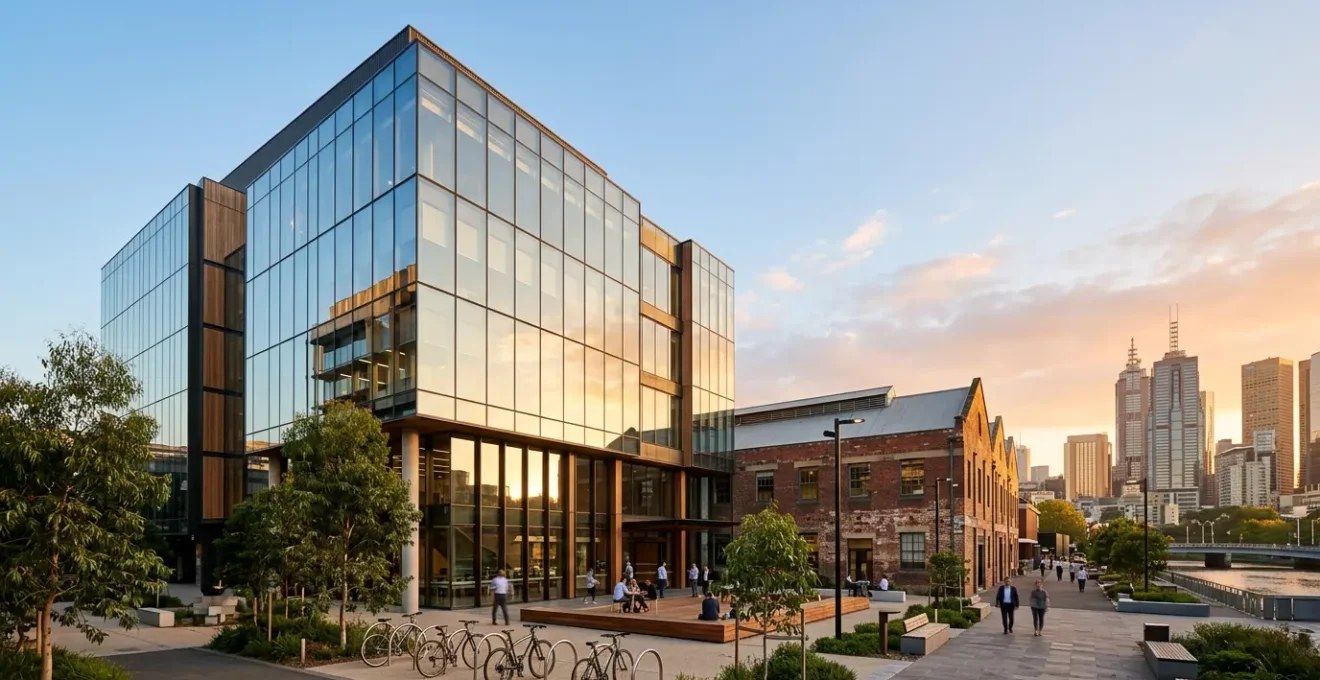
The success of a tech expansion in Australia isn’t about choosing a city; it’s about selecting a specific precinct where talent, infrastructure, and culture are already calibrated for growth.
- Precinct culture—whether the creative buzz of Surry Hills or the scale-up intensity of Cremorne—directly impacts innovation and talent attraction.
- Proximity to university partnerships and leveraging the R&D tax offset are not perks, but essential financial and talent-pipeline strategies.
Recommendation: Conduct a precinct-level audit focusing on ecosystem calibration rather than a broad city-based comparison.
For any tech expansion manager eyeing Australia, the first question seems obvious: Sydney or Melbourne? This debate dominates boardroom discussions, focusing on broad strokes like market size and cost of living. For years, the conventional wisdom has been to weigh these two titans, pick a side, and plant a flag in the Central Business District (CBD). This approach treats the city as a monolith, assuming that a prestigious postal code is a sufficient foundation for building a high-performance development team.
But this city-level view is becoming dangerously outdated. While surface-level factors matter, they obscure the most critical variable for success in Australia’s tech landscape: the precinct. The real story of growth isn’t happening at the city scale, but within hyper-local, specialised ecosystems where talent, infrastructure, and culture create a unique gravitational pull. Global giants are no longer just choosing a city; they are surgically selecting a neighbourhood whose very DNA is calibrated to accelerate their specific goals.
What if the key wasn’t choosing between Sydney and Melbourne, but between Cremorne’s scale-up intensity and Surry Hills’ creative dynamism? This is the ‘Precinct-First’ strategy. It moves beyond generic metrics and focuses on finding a micro-climate that provides a compounding advantage. This article deconstructs that playbook. We will explore how to evaluate these precincts not as mere locations, but as strategic assets, examining the nuances of their culture, the mechanics of their talent pipelines, the power of their financial incentives, and the resilience of their core infrastructure.
To help you navigate this strategic decision, this guide breaks down the essential components of the precinct-first approach. The following sections provide a detailed analysis of the key factors that will determine the ideal home for your Australian tech headquarters.
Summary: The Precinct Playbook: Why Global Tech Giants Are Targeting Hyper-Local Ecosystems in Australia
- Cremorne vs Surry Hills: Which Tech Hub Fits Your Company Culture?
- How to Partner with Australian Universities to Pipeline Tech Talent?
- How to Claim the 43.5% R&D Tax Offset for Your Software Development?
- Fiber and Power: What Tech HQs Need to Check Before Signing a Lease?
- Do You Even Need a HQ or Is a Distributed Team Better for Aus Tech?
- Surry Hills vs CBD: Where Should Your Tech Startup Set Up Shop?
- How Melbourne’s Multiculturalism Drives Innovation in Product Design?
- How Australian Fintechs Are Challenging the Big Four Banks?
Cremorne vs Surry Hills: Which Tech Hub Fits Your Company Culture?
The choice between tech precincts is fundamentally a decision about culture and identity. The ambient energy of a neighbourhood has a direct impact on your ability to attract specific talent profiles and foster a desired style of innovation. This is what we call Cultural Compounding: the right environment doesn’t just house your team; it accelerates its work. Two of Australia’s most prominent precincts, Melbourne’s Cremorne and Sydney’s Surry Hills, offer a stark contrast in their cultural calibration.
Cremorne, often dubbed “Silicon Yarra,” has cultivated an ecosystem built for ambition and scale. It’s a hub defined by its density of established tech unicorns and rapidly growing scale-ups. This concentration creates an intense, performance-driven atmosphere where the focus is on execution, growth metrics, and engineering excellence.
Case Study: Cremorne’s Transformation into a Tech Powerhouse
The University of Melbourne was a founding member of the consortium establishing the Cremorne Digital Hub (CDH), aiming to cement the precinct as a world-class technology hub. This initiative builds on an already powerful base. Cremorne contributes more than $4 billion to the state’s economy annually and is the headquarters for Australian tech giants like Carsales.com, SEEK, REA Group, and MYOB. This density of major players creates a unique environment for B2B collaboration and attracting senior talent experienced in scaling operations.
In contrast, Surry Hills in Sydney exudes a creative, bohemian energy. It’s a magnet for design-led startups, media-tech companies, and agencies where the lines between technology and creative arts are blurred. The neighbourhood’s converted warehouses, independent coffee shops, and vibrant street art foster a culture of experimentation and unconventional thinking. The table below highlights the key differences for an expansion manager’s consideration.
| Factor | Cremorne | Surry Hills |
|---|---|---|
| Vacancy Rate | Data not available | 6.7% (July 2024) |
| Primary Industry Focus | Tech unicorns, Scale-ups | Creative & Tech Industries |
| Key Companies | Carsales, SEEK, MYOB, REA Group | Tech & creative startups |
| Infrastructure | 700+ businesses, Digital Hub | Largest fringe market |
| Economic Contribution | $4 billion annually | Data not available |
How to Partner with Australian Universities to Pipeline Tech Talent?
Securing a steady stream of high-quality tech talent is the primary concern for any expansion manager. While a precinct’s general population is important, the most successful tech giants create a strategic symbiosis with local universities. This goes far beyond attending career fairs. It’s about building a robust, multi-faceted partnership that establishes a powerful Talent Gravity, pulling the brightest minds towards your organization before they even graduate.
Australian universities are actively seeking industry partners to co-develop research, embed students in real-world projects, and ensure their curriculum aligns with market needs. For a tech company, this presents an opportunity to shape the next generation of developers, data scientists, and product managers to your specific technology stack and company culture. It transforms recruitment from a reactive process into a proactive, long-term talent development strategy.
This approach is exemplified by the connection between commercial tech hubs and university-led innovation precincts. As noted by Professor Pearce from the University of Melbourne regarding the Cremorne Digital Hub, there is a clear strategic link: “Working in tandem with our enormously successful Melbourne Connect innovation precinct, the CDH will play an important role in driving Victoria’s digital transformation.” This highlights a direct pathway from academic research and student talent to commercial application and employment, right within the same ecosystem.
Your Action Plan: Frameworks for University R&D Collaboration
- Explore ARC Linkage Projects for structured university-industry R&D partnerships with co-funding opportunities.
- Consider joining Cooperative Research Centres (CRCs) for longer-term collaborative research with multiple partners.
- Establish IP ownership frameworks upfront—decide between exclusive licensing, shared ownership, or university retention models.
- Structure embedded researcher programs with PhD or Post-doc placements working on-site on specific technical challenges.
- Co-create specialized micro-credentials or for-credit courses aligned with your tech stack to train students pre-graduation.
How to Claim the 43.5% R&D Tax Offset for Your Software Development?
Beyond talent and culture, the financial viability of your Australian expansion hinges on leveraging government incentives. The most significant of these is the Research & Development (R&D) Tax Incentive, a powerful mechanism that can dramatically reduce the cost of your software development activities. For eligible companies, it’s not just a benefit; it’s a core part of the financial strategy.
Specifically, for small and medium-sized enterprises with an annual turnover of less than $20 million, the program offers a 43.5% refundable tax offset. This means a significant portion of your development expenditure can be returned as a cash refund, providing a vital source of non-dilutive funding. However, accessing this incentive requires a rigorous and systematic approach to documentation. The incentive is designed to support genuine experimentation and the creation of new knowledge, not routine software development.
This is where many companies fail. The key is to meticulously document the ‘technical uncertainty’ of your projects. You must be able to prove that the outcome of your development work could not have been known or determined in advance by a competent professional in the field. This involves tracking core experimental activities versus supporting activities, maintaining detailed time records, and preserving a clear evidence trail of hypotheses, tests, and results—including failures, which are often the strongest evidence of true R&D.
The process of compiling this evidence is as crucial as the code itself. Visualizing the workflow helps to understand the level of detail required for a successful claim. The image below represents the meticulous organization needed to translate technical work into compliant R&D documentation.
As you can see, success lies in the details. Proper documentation is not an administrative afterthought but a parallel workstream that must be integrated into your development lifecycle from day one. Failing to do so means leaving one of the most substantial financial advantages of operating in Australia on the table.
Fiber and Power: What Tech HQs Need to Check Before Signing a Lease?
In the digital economy, infrastructure is not a utility; it’s the bedrock of your operation. For a tech headquarters, the quality of its connectivity and power supply is a strategic asset that dictates uptime, performance, and scalability. While most modern office buildings in major Australian precincts advertise high-speed internet, an expansion manager must look deeper to assess true Infrastructure Density and resilience.
A single fiber line into a building represents a single point of failure. True resilience comes from carrier diversity—having multiple, physically separate fiber entry points from different providers. This ensures that a localized outage or maintenance from one carrier doesn’t bring your entire operation to a halt. Similarly, power grid stability is paramount. A connection to multiple substations and robust, regularly tested backup generator systems with clear fuel supply agreements are not luxuries but necessities for any business that relies on 100% uptime.
These are not details to be glossed over in a lease agreement. They should be central to your negotiations, with specific Service Level Agreements (SLAs) covering network uptime, power quality, and even cooling performance for server rooms. Companies like NEXTDC, a leading data centre operator with 11 facilities across Australia, have built their entire business model on providing this level of reliability, offering high-performance hosting and connectivity services that many tech companies choose to leverage for their core infrastructure, even when maintaining a separate HQ.
Before signing any lease, your due diligence checklist must include these critical infrastructure points:
- Carrier Diversity: Confirm multiple fiber entry points and providers.
- Power Redundancy: Verify connections to multiple substations and backup generator specifications, including fuel contracts.
- Last-Mile Validation: Test actual bandwidth and latency, don’t just rely on advertised speeds.
- Dark Fiber Access: Check for the availability of unlit fiber for future, private network expansion.
- Rooftop Access Rights: Secure options for installing your own satellite or 5G antennas for future connectivity needs.
Do You Even Need a HQ or Is a Distributed Team Better for Aus Tech?
The traditional model of a centralized, flagship headquarters is no longer the only path to success in Australia. The rise of remote work has presented a compelling alternative: a fully distributed team. For a tech expansion manager, this question is critical, as the answer profoundly impacts everything from cost structure and talent acquisition to company culture and tax obligations.
A distributed model offers undeniable advantages, primarily the ability to access a national talent pool. You are no longer restricted to developers within commuting distance of a single metro area. This can be a game-changer for finding highly specialized skill sets. Furthermore, it dramatically reduces or eliminates the high fixed costs associated with prime real estate. Some global tech companies have fully embraced this model in Australia; for instance, companies like Chainlink Labs have adopted a fully remote workforce, tapping into talent across the country without a central office.
However, this flexibility comes with significant operational complexity. Managing payroll tax, for example, becomes a multi-state affair, as each Australian state and territory has its own regulations. Documenting R&D for the tax incentive also becomes more challenging, as you need to prove collaboration and systematic progression of work across a dispersed team. Perhaps most importantly, building a cohesive company culture requires a much more intentional and structured effort when organic, in-person interactions are absent. A hybrid ‘Hub & Spoke’ model, with smaller regional offices supporting a remote workforce, offers a potential compromise.
| Factor | Central HQ Model | Distributed Model | Hub & Spoke Hybrid |
|---|---|---|---|
| Payroll Tax Complexity | Single state system | Multiple state obligations | Mixed compliance |
| R&D Tax Documentation | Easier to prove collaboration | Complex documentation needs | Moderate complexity |
| Talent Access | Limited to metro area | National talent pool | Best of both |
| Culture Building | Strong in-person bonds | Requires intentional effort | Balanced approach |
| Real Estate Costs | High fixed costs | Minimal costs | Reduced footprint |
Surry Hills vs CBD: Where Should Your Tech Startup Set Up Shop?
For a tech startup planting its flag in Sydney, the location choice often boils down to two distinct options: the corporate prestige of the Central Business District (CBD) or the creative pulse of a fringe market like Surry Hills. This decision is less about geography and more about strategic positioning. The address on your business card sends a clear signal about your company’s identity, priorities, and who you are trying to impress.
The Sydney CBD offers undeniable advantages in terms of proximity to large enterprise clients, financial institutions, and major transport hubs. It projects an image of stability, scale, and corporate seriousness. For a later-stage startup looking to close enterprise deals or secure significant institutional funding, a CBD address can provide crucial credibility. However, this comes at a premium cost for real estate and can place you in a cultural environment that feels more corporate than innovative.
Surry Hills, in contrast, is the heart of Sydney’s creative and startup ecosystem. It’s where early-stage venture capitalists look for emerging talent and where developers and designers feel most at home. The precinct is highly sought after, and as a result, Surry Hills maintains one of the lowest fringe market vacancy rates at just 6.7%, indicating fierce competition for space. The visual and cultural difference between the two areas is palpable, with Surry Hills’ converted warehouses standing in stark contrast to the CBD’s glass towers.
The strategic trade-off was succinctly captured in an industry analysis on location strategy. It highlights the different audiences each precinct speaks to:
Surry Hills attracts talent and early-stage VCs; the CBD impresses enterprise clients and late-stage investors.
– Industry Analysis, Location Strategy for Tech Startups
How Melbourne’s Multiculturalism Drives Innovation in Product Design?
A key, often underestimated, asset of the Melbourne tech ecosystem is its profound multiculturalism. For a tech company focused on product development, this is not just a social benefit; it’s a powerful engine for innovation. A diverse team, drawn from a multicultural population, brings a wealth of different perspectives, user experiences, and problem-solving approaches directly into the design process.
This diversity is a strategic advantage for global product design and testing. A product team in Melbourne can inherently test concepts and user interfaces against a wide array of cultural assumptions and linguistic nuances without ever leaving the city. This makes Melbourne a near-perfect testbed for companies with ambitions across the Asia-Pacific region and beyond. A feature that resonates with someone from a Southeast Asian background versus a European one can be identified and refined early in the development cycle, leading to a more globally robust and inclusive product.
This environment of innovation is further nurtured by a supportive government and world-class educational institutions. The Victorian government’s LaunchVic agency provides critical funding to startups, particularly in high-growth sectors like fintech, health tech, and edtech. Meanwhile, institutions like the University of Melbourne and RMIT University are renowned for producing some of Australia’s top technological talent, feeding a continuous stream of skilled graduates into the ecosystem. This creates a virtuous cycle: diverse talent builds innovative products, which attract investment, which in turn draws more top talent to the city.
Ultimately, Melbourne’s multicultural fabric ensures that teams are not designing in a monocultural echo chamber. It forces a more empathetic and user-centric approach to design, which is essential for any tech company aiming to build products for a global audience. The city’s ‘liveability’ is not just about lifestyle; it’s about creating a melting pot of ideas that directly fuels a more competitive and innovative tech sector.
Key Takeaways
- The ‘Precinct-First’ Strategy: Your most critical decision isn’t the city, but the specific micro-ecosystem that aligns with your company’s culture and growth stage.
- Talent and R&D as a System: The most effective expansions integrate directly with university talent pipelines and leverage the R&D tax incentive as a core financial strategy, not an afterthought.
- Infrastructure is Non-Negotiable: True operational resilience requires deep due diligence on carrier diversity and power redundancy, with specific SLAs written into your lease.
How Australian Fintechs Are Challenging the Big Four Banks?
To understand the potential of Australia’s tech ecosystem, one only needs to look at the fintech sector. For decades, the financial landscape was dominated by the “Big Four” banks. Yet, in recent years, a wave of agile and innovative fintechs has successfully challenged this oligopoly, demonstrating the power of technology to disrupt even the most entrenched industries. Their story serves as a powerful case study for any tech company considering an Australian expansion.
These fintechs have succeeded not by trying to replicate the banks, but by identifying and exploiting their weaknesses. They leverage regulations like the Consumer Data Right (CDR, or Open Banking) to access customer data and build superior user experiences. They focus on underserved market segments, such as small business lending or superannuation management, that the larger banks have neglected. And they build on top of existing infrastructure, like the New Payments Platform (NPP), to innovate on the customer-facing frontend while partnering with banks on the backend.
The most famous example of this disruption is Afterpay. Founded in Sydney and later relocating its headquarters to Melbourne, the company fundamentally changed consumer credit with its “Buy Now Pay Later” model. Its acquisition by Block (formerly Square) solidified the global standing of Australian fintech. Afterpay’s success proves that a local startup can leverage the Australian tech environment—its talent, regulatory framework, and consumer market—to achieve massive international scale.
The strategies employed by these fintechs offer a playbook for any tech disruptor. They demonstrate a deep understanding of the local market, an ability to attract top talent away from established players with agile culture and equity, and a relentless focus on mobile-first design and user experience. Their rise is a testament to the vibrancy and opportunity within Australia’s specialized tech precincts.
By adopting a precinct-first strategy and performing a deep audit of the culture, talent, and infrastructure of these specialised ecosystems, your company can move beyond the generic Sydney vs. Melbourne debate. The next logical step is to begin your own ecosystem calibration audit to identify the single best precinct to serve as the launchpad for your Australian growth.