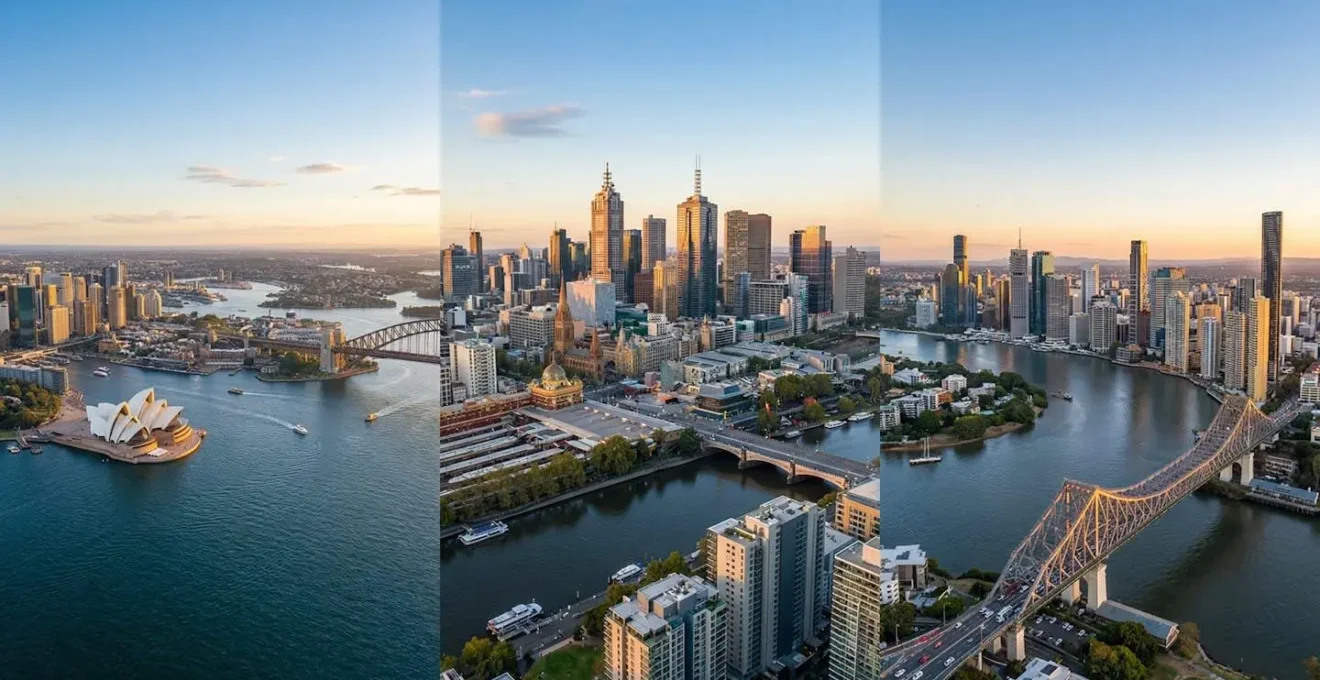
The optimal Australian city for your headquarters is determined not by office rent, but by a strategic calculation of Total Cost of Business (TCOB) aligned with your specific industry and growth model.
- Sydney excels as a global financial and tech gateway with the deepest talent pool, but demands sophisticated retention strategies to offset high operational costs.
- Melbourne offers significant value through high office incentives and a strong domestic logistics network, making it a compelling choice for businesses focused on operational efficiency and R&D.
Recommendation: Use this framework to model costs beyond real estate, factoring in talent acquisition velocity, supply chain drag, and incentive alignment to make a data-driven, long-term decision.
For a foreign investor, the choice between Sydney, Melbourne, and Brisbane as an Australian headquarters often begins with a spreadsheet comparing office lease prices. This is a logical, but fundamentally flawed, starting point. While the “sticker price” of real estate is a visible expense, it represents only a fraction of the true operational landscape. The most common advice focuses on generic lifestyle perks or surface-level cost differences, failing to address the critical drivers of long-term business success and profitability for an incoming enterprise.
The on-the-ground reality is that the best location is rarely the cheapest. A decision based solely on rent per square meter can lead to significant downstream costs in talent acquisition, supply chain friction, and staff turnover. The crucial calculation is not the cost of space, but the Total Cost of Business (TCOB), a more holistic metric that balances fixed expenses with the efficiency and resilience of your operations. This includes talent velocity—the speed at which you can hire and retain skilled staff—and minimizing logistics drag in your supply chain.
This analysis moves beyond the platitudes. We will dissect the strategic value proposition of each city, not just its cost. By examining the interplay between commercial real estate, talent density, logistical infrastructure, government support, and executive livability, we will build a framework to help you determine which city offers the highest return on investment for your specific business model. It’s time to shift the question from “Which city is cheaper?” to “Which city is the most strategic launchpad for our Asia-Pacific ambitions?”.
This article provides a comprehensive, data-driven comparison to guide your decision-making process. Below is a summary of the key strategic factors we will explore to help you identify the optimal location for your Australian headquarters.
Summary: Choosing Your Australian Business Hub
- How Much Does Class-A Office Space Cost in CBD vs Fringe Suburbs?
- Which City Has the Deepest Tech Talent Pool in 2024?
- Port Access vs Air Links: Choosing a Hub Based on Supply Chain Needs?
- Which State Government Offers the Best Grants for Foreign Investors?
- Which City Offers the Best Schooling and Lifestyle for Relocating Families?
- How to Retain Staff in Sydney When Rent Is Eating Their Salary?
- Is Melbourne Office Space Better Value Than Sydney in the Post-COVID Era?
- Why Sydney Remains the Undisputed Gateway for Global Business?
How Much Does Class-A Office Space Cost in CBD vs Fringe Suburbs?
The initial analysis for any market entry rightfully begins with real estate costs, the most tangible line item on an operational budget. Australia’s office market is defined by a significant price disparity between its major east coast cities. Sydney consistently holds the title of the nation’s most expensive market, a direct reflection of its status as the primary financial and corporate hub. For premium Grade-A office space in the Central Business District (CBD), the costs are substantial.
Data from the first quarter of 2024 shows that prime Sydney CBD office space commands a high premium. For instance, recent figures indicate that average net face rents for premium office property in the Sydney CBD can reach up to $1,449 per square meter. In contrast, Melbourne and Brisbane present a more accessible price point. While still significant commercial centers, their CBDs offer considerable savings, a factor that can dramatically alter initial capital expenditure models for new entrants.
The following table provides a clear comparison of prime office costs across the three cities, highlighting the stark differences in both traditional lease and flexible space arrangements. This data underscores Sydney’s premium positioning.
| City | CBD Prime Office (/sqm) | Flexible Space ($/person/month) | Market Trend |
|---|---|---|---|
| Sydney | $1,356 | $605 | Highest nationally |
| Melbourne | $691 | $600 | High vacancy rates |
| Brisbane | $703 | $534 | Second most expensive |
However, a CBD-only analysis is incomplete. A savvy investor must also evaluate the “fringe” suburbs—locations like North Sydney, Parramatta, or Melbourne’s Cremorne and South Yarra. These areas often provide a significant discount on rent while maintaining strong transport links and amenities. The decision between a prestigious CBD address and a cost-effective fringe location is a strategic one, balancing brand perception against operational overhead. This is the first step in calculating the true Total Cost of Business.
Which City Has the Deepest Tech Talent Pool in 2024?
Beyond physical office space, the single most critical asset for a modern business is its human capital. For tech, finance, and other knowledge-based industries, the depth and accessibility of the local talent pool can make or break a company’s growth trajectory. Australia faces a well-documented skills challenge, with a national need for an estimated 312,000 additional tech workers by 2030. This scarcity makes the choice of city a crucial strategic decision for talent acquisition.
Sydney stands out as the epicenter of Australia’s tech ecosystem. It possesses the largest and most diverse concentration of tech professionals, particularly in high-demand fields like FinTech, software development, and cybersecurity. This density creates a powerful network effect, attracting both multinational corporations and ambitious startups, which in turn attracts more talent. This concentration, however, comes with intense competition for top performers and upward pressure on salaries.
As the visualization suggests, each city has a distinct professional energy. While Melbourne boasts a rapidly growing tech scene, particularly in MedTech and gaming, and Brisbane is emerging as a hub for SaaS and environmental tech, Sydney’s sheer scale remains its dominant advantage. The city’s preeminence in specialized sectors like managed service providers (MSPs) is particularly notable, as one market analysis highlights:
Sydney accounts for approximately 35% of all MSP demand in Australia, with Melbourne and Perth also playing significant roles
– Konnect.ph Market Analysis, Australia’s Tech Skill Shortage: 2025 Market Scan
For a foreign investor, the key metric is talent velocity: how quickly can you build a world-class team? In Sydney, the pool is vast, but the competition is fierce. In Melbourne and Brisbane, the pool may be smaller but potentially more accessible, offering an opportunity to become an employer of choice in a less saturated market.
Port Access vs Air Links: Choosing a Hub Based on Supply Chain Needs?
For businesses dealing with physical goods, from high-tech components to consumer products, logistics infrastructure is a non-negotiable pillar of operational success. The efficiency of your supply chain directly impacts margins, delivery times, and customer satisfaction. The choice between Sydney, Melbourne, and Brisbane must be heavily weighted by their respective strengths in sea and air freight, a factor we can term logistics drag—the hidden costs of inefficiency.
Sydney’s primary logistical advantage lies in its dominance as Australia’s premier air freight hub. Sydney Airport is the country’s main international gateway for high-value, time-sensitive cargo. For businesses in sectors like pharmaceuticals, luxury goods, or critical electronics, this direct and frequent access to global air networks is invaluable. In 2022, Sydney Airport handled 53% of exports and 55% of imports by air, making it the clear leader for businesses reliant on international air links.
Melbourne, conversely, has strategically positioned itself as Australia’s domestic logistics powerhouse. Its port is the largest container port in the nation, and its well-planned industrial zones and road/rail networks make it an ideal center for national distribution. Melbourne Airport has also invested heavily in its cargo capabilities, solidifying its role as a key logistics hub, particularly for domestic freight.
Case Study: Melbourne’s Rise as a Domestic Freight Hub
Melbourne Airport has established itself as Australia’s largest domestic freight hub, handling a significant portion of the nation’s air cargo. The airport has undertaken comprehensive upgrades to its cargo handling facilities, specifically to accommodate next-generation freighter aircraft. This strategic investment supports its critical role as a logistics center for both efficient national distribution and connecting to international trade routes, demonstrating a clear focus on enhancing its supply chain capabilities.
Brisbane offers a compelling alternative, with a geographically strategic location for servicing both the northern states and the broader Asia-Pacific region. Its port is one of Australia’s fastest-growing, and its airport has significant capacity for expansion. The decision, therefore, depends entirely on your business model: if your strategy hinges on rapid import/export of high-value goods to and from global markets, Sydney’s air links are unparalleled. If your focus is on efficient, cost-effective distribution across Australia, Melbourne’s integrated sea and land network is superior.
Which State Government Offers the Best Grants for Foreign Investors?
Beyond the operational mechanics of cost and logistics, a crucial factor for any foreign investor is the level of government support available. State governments in Australia are highly competitive in attracting foreign direct investment (FDI), offering a range of financial incentives, grants, and non-financial assistance. However, the most valuable support is not always the largest cheque; it is the one most closely aligned with your industry and strategic goals—a concept known as incentive alignment.
The governments of New South Wales (NSW), Victoria, and Queensland each have distinct strategic priorities that shape their investment programs. NSW, with Sydney at its core, has a strong focus on attracting businesses in FinTech, cybersecurity, and professional services. Programs are often geared towards establishing major regional headquarters and fostering innovation within these key sectors. Victoria, centered around Melbourne, places a heavy emphasis on MedTech, life sciences, and advanced manufacturing, leveraging its world-class research universities and medical institutes. Queensland’s incentives often target renewable energy, ag-tech, and tourism, playing to the state’s natural resources and climate.
Simply comparing the dollar value of grants is a misleading exercise. A MedTech company might find far more value in Victoria’s ecosystem of research partners and specialized landing pads than in a generic cash grant from another state. An investor’s due diligence must go beyond the headline numbers and assess the entire support package. This includes the complexity of the application process, the performance milestones required, and the quality of the local networks the government can facilitate.
Your Action Plan for Assessing State Incentives
- Assess grant application complexity and typical success rates for your industry.
- Evaluate non-financial support including landing pads and regulatory assistance.
- Review clawback clauses and performance milestone requirements.
- Compare alignment between state priorities and your business sector.
- Consider the quality of local networks and introduction services provided.
Ultimately, the “best” grant is the one that acts as a strategic partnership, accelerating your market entry and embedding your business within a supportive and relevant local ecosystem. A thorough assessment of this alignment is a critical step in making a truly informed location decision.
Which City Offers the Best Schooling and Lifestyle for Relocating Families?
For any company establishing a new headquarters, attracting and retaining senior leadership is paramount. When these leaders are relocating from overseas, the decision is rarely just about the job; it is about the life they and their families will lead. The “livability” of a city—its schools, housing, safety, and cultural amenities—is not a soft perk but a hard-nosed business consideration that directly impacts your ability to secure top-tier executive talent. This is the Livability ROI.
Sydney offers a globally recognized, high-energy lifestyle. Its iconic harbor, world-class beaches, and vibrant dining scene are powerful draws. This is complemented by a concentration of Australia’s most prestigious private schools and universities. The trade-off is a notoriously high cost of living, particularly for premium family housing in desirable school catchments. However, Sydney’s economic dynamism means it can support the salary expectations of top global talent; for instance, top leadership positions in Sydney command impressive salaries, with CIOs earning up to $375,000, enabling access to this premium lifestyle.
Melbourne presents itself as the cultural capital, renowned for its arts, sports, and coffee culture. It offers a lifestyle that many find more relaxed and community-oriented than Sydney’s. Its school system is equally strong, and the cost of premium housing, while high, is generally more accessible than in Sydney. For families prioritizing a rich cultural life and a slightly less frantic pace, Melbourne holds immense appeal.
Brisbane provides a distinct subtropical lifestyle, characterized by outdoor living and a more laid-back atmosphere. Its housing market is significantly more affordable, allowing for a higher standard of living on a comparable executive salary. While its array of top-tier schools and cultural institutions is smaller than that of Sydney or Melbourne, it is rapidly growing and offers excellent quality. For an executive team that values work-life balance and a family-friendly environment, Brisbane is an increasingly attractive proposition.
How to Retain Staff in Sydney When Rent Is Eating Their Salary?
The primary challenge of operating in Sydney is undeniably its high cost of living, which exerts constant pressure on staff salaries and, consequently, on employee retention. When a significant portion of an employee’s salary is consumed by rent or a mortgage, even a competitive compensation package can feel inadequate. This erodes morale and makes your top talent susceptible to offers from companies in more affordable cities or even from remote-first global competitors. For a business to thrive in Sydney long-term, it must adopt sophisticated retention strategies that go beyond simple pay rises.
One of the most effective approaches is the “hub-and-spoke” model. This involves maintaining a prestigious, client-facing headquarters in the Sydney CBD while establishing satellite offices or offering subsidized co-working memberships in more affordable lifestyle hubs like the Central Coast, Wollongong, or the Blue Mountains. This gives employees the flexibility to live in areas with a lower cost of living while remaining connected to the central corporate culture. A powerful real-world example demonstrates this strategy’s effectiveness, even when applied between major cities.
Case Study: CommBank’s Melbourne Tech Hub Initiative
To tap into Victoria’s robust digital technology industry, CommBank partnered with Monash University and RMIT to launch a major technology hub in Melbourne. This hub supports over 400 software developers, cloud engineers, and cyber specialists. The initiative demonstrates how a major Sydney-based corporation can establish a large-scale satellite office in a more affordable major city to access a deep talent pool, creating a collaborative space where engineers can thrive while mitigating the high operational and salary costs associated with a Sydney-only presence.
Beyond physical location, other powerful retention levers exist. Companies must become more creative with their value proposition. This can include:
- Implementing a superior equity or Employee Stock Ownership Plan (ESOP) to give staff a tangible stake in the company’s long-term success.
- Offering aggressive and personalized professional development budgets that represent a clear investment in an employee’s career growth.
- Designing unique, high-value perks such as company-sponsored wellness retreats, generous travel allowances, or subsidized childcare that directly address lifestyle pain points.
The key is to shift the conversation from purely cash compensation to a holistic view of employee value and well-being. By proactively mitigating the financial pressures of Sydney life, a company can build a loyal, stable, and highly motivated workforce.
Is Melbourne Office Space Better Value Than Sydney in the Post-COVID Era?
In the wake of the global shift towards flexible work, the commercial real estate market has been fundamentally altered. This has created a unique opportunity for investors to find exceptional value, particularly in markets with higher vacancy rates. While Sydney’s face rents remain high due to its global status, Melbourne’s market currently presents a compelling argument for being the best *value* proposition in Australia. The key lies in looking beyond the “face rent” and analyzing the “effective rent”—the actual amount paid after accounting for incentives.
Melbourne’s CBD has experienced higher office vacancy rates post-COVID, prompting landlords to offer significant incentives to attract and retain high-quality tenants. These incentives can take the form of rent-free periods, contributions to office fit-outs, or a combination of both. This creates a substantial gap between the advertised price and the real cost. For example, recent data for Q3 2025 in the Melbourne CBD shows effective rents around $488/sqm with incentives as high as 46.8%. This means a business could be paying nearly half the advertised rent, a staggering value proposition that significantly lowers the Total Cost of Business.
This table provides a direct comparison of key market metrics, illustrating the value differential between the Sydney and Melbourne CBDs. The difference in flexible space cost and the higher vacancy rate in Melbourne are clear indicators of a tenant-favorable market.
| Metric | Sydney CBD | Melbourne CBD |
|---|---|---|
| Median Flex Space (per desk/month) | $1,000 | $650 |
| Coworking Desk (per month) | $589 | $500 |
| Premium Net Face Rent | $992/sqm | $917/sqm |
| Vacancy Rate | Lower | 13.8% |
For a foreign investor, this presents a strategic choice. Securing a premium office space in a landmark Melbourne building at a heavily discounted effective rent can free up significant capital to be reinvested into talent, technology, or marketing. While Sydney offers undeniable prestige, Melbourne currently offers unparalleled financial leverage. In the post-COVID era, where operational efficiency is paramount, Melbourne’s combination of a deep talent pool and exceptional real estate value makes it a formidable contender for any business focused on maximizing its return on investment from day one.
Key takeaways
- Location choice must be driven by Total Cost of Business (TCOB), not just rent.
- Sydney offers the deepest talent pool but requires advanced retention strategies to combat high living costs.
- Melbourne provides exceptional value through high office incentives and strong domestic logistics, while Brisbane is a rising, cost-effective hub.
Why Sydney Remains the Undisputed Gateway for Global Business?
After analyzing costs, talent, logistics, and lifestyle, the data presents a nuanced picture. Melbourne offers compelling value, and Brisbane presents a high-growth, cost-effective alternative. Yet, for many of the world’s leading multinational corporations (MNCs), the choice invariably comes back to Sydney. The reason transcends any single metric on a spreadsheet; it is about Sydney’s role as the undeniable commercial, financial, and psychological gateway to the Australian and Asia-Pacific markets.
The city’s gravitational pull is demonstrated by the sheer concentration of global corporate power. It is home to the Australian Stock Exchange (ASX), the Reserve Bank of Australia, and the national headquarters for the majority of financial institutions and professional services firms. This creates an unparalleled ecosystem of capital, expertise, and high-level decision-makers. For a foreign company, being in Sydney means being at the heart of the conversation. Data shows that over 600 multinational companies run their Asia-Pacific operations from Sydney, a critical mass that creates immense network effects for new entrants.
Furthermore, Sydney has cultivated a dominant position in the industries of the future. It is the undisputed FinTech capital of Australia, with Tourism Australia reporting that 60 per cent of the nation’s fintech companies are based in the city’s “Tech Central” precinct. This industry-specific density means access to a hyper-specialized talent pool, a rich network of potential partners and clients, and an environment of constant innovation. For a company in finance, tech, or a related field, not being in Sydney can mean being strategically sidelined.
While the operational costs are higher, the premium is often justified as an investment in access, influence, and brand perception. Establishing a headquarters in Sydney sends a clear signal to the market, to clients, and to potential talent: this is a serious, globally-oriented enterprise operating at the highest level. For businesses where proximity to capital markets, top-tier corporate clients, and a global talent pipeline is the primary driver of success, Sydney is not just the best choice—it is often the only choice.
Now that you have a comprehensive framework for evaluating Sydney, Melbourne, and Brisbane, the next logical step is to apply this data-driven model to your specific business needs. A personalized analysis is crucial to making a final, confident decision.