Choosing between Bondi and Manly based on reputation alone often leads to a dangerous or unpleasant day at the beach.
- The key isn’t the beach’s vibe, but its daily conditions—matching the rips, swell, and crowds to your personal ability is crucial for safety.
- Mastering local knowledge, from spotting a rip current to understanding surf lineup etiquette, will transform your entire Australian beach experience.
Recommendation: Before you even pack your towel, learn to read the ocean’s signs. This guide shows you how, ensuring you choose the right beach for you, on any given day.
Standing at the top of Bondi, looking down at the sweep of sand, it’s easy to get overwhelmed. You see the crowds, the thumping waves, and you wonder if you’ve made the right choice. The usual advice pits Bondi against Manly in a simple personality contest: Bondi is the bustling, glamorous icon; Manly is the laid-back, family-friendly escape. This is the classic tourist view, and frankly, it’s a dangerous oversimplification. As a surf lifesaver, I’ve seen this mistake play out too many times. People choose a beach based on its Instagram tag, not its conditions.
The truth is, both Bondi and Manly can be paradise or a nightmare, depending on the day and, more importantly, on your own awareness. The real difference isn’t just about fish and chips versus fine dining. It’s about the subtle language of the ocean, the intensity of the sun, and the unwritten rules of the sand and surf. The secret to a perfect beach day isn’t picking a side in the Bondi vs. Manly debate; it’s learning to read the environment like a local. But what if the key wasn’t about which beach is ‘better’, but about understanding which beach’s ‘personality’ on a specific day matches your own skill level?
This guide is your initiation into that local mindset. We’ll move beyond the clichés to give you the practical skills you need to navigate Australian beach culture safely. We’ll break down how to spot deadly rip currents, how to find your place in a crowded surf lineup, and why the day for many locals starts long before the sun gets fierce. By the end, you won’t just be choosing a beach; you’ll be making an informed decision based on genuine situational awareness.
This article breaks down the essential skills you need to not only choose between Bondi and Manly but to safely enjoy any Australian beach. The following sections will guide you through reading the ocean, understanding the culture, and respecting the environment.
Summary: A Lifesaver’s Handbook to Sydney’s Beach Culture
- How to Spot a Rip Current Before You Enter the Water?
- Where Are the Secret Beaches Locals Go to Avoid Tourists?
- How to Join the Lineup Without Getting Yelled At by Locals?
- SPF 50+ and Timing: How to Avoid Burn in the Australian Sun?
- Fish and Chips vs Fine Dining: Where to Eat with a View?
- Ocean Swims and Coffee: Why the Australian Day Starts at 6 AM?
- How to Keep Food Fresh and Drinks Cold in 35-Degree Heat?
- How to Experience Australian Nature Without endangering Yourself or the Environment?
How to Spot a Rip Current Before You Enter the Water?
This is the single most important skill you can learn at an Australian beach. Forget everything else until you master this. A rip current is a powerful, narrow channel of water moving away from the shore. It won’t pull you under, but it will pull you out, and panicking is what leads to disaster. The calm-looking spot is often the most dangerous. In fact, research from Surf Life Saving Australia reveals that an estimated 75% of people can’t correctly identify a rip current, which is why taking a moment to observe is non-negotiable.
Before you even get sand on your feet, stop and watch the water for ten minutes. Look for the signs. A rip often appears as a gap in the breaking waves, where the water looks deceptively calm. You might see a channel of choppy, churning water, or a different colour where the current is kicking up sand. Sometimes, you’ll see a ‘river’ of foam, seaweed, or debris moving steadily out to sea, against the direction of the waves. Both Bondi and Manly have rips every single day; their location and intensity just change with the swell and tide. Your job is to see them before you’re in them.
To help you, here is the basic observation protocol:
- Find a high vantage point (like a dune or promenade) to get a clear overview.
- Look for gaps in the wave patterns. Rips are the expressways out, so waves don’t break there as often.
- Identify areas where the water is discolored or choppy, moving in a line away from the beach.
- Watch for anything on the surface (foam, debris) that is flowing out to sea.
- If in doubt, always swim between the red and yellow flags. That’s the area we, the lifesavers, have identified as the safest spot.
Remember, the ocean is powerful and deserves respect. A few minutes of observation can be the difference between a great day and a tragedy. If you do get caught, don’t fight it. Float, stay calm, and raise your arm to signal for help. The rip won’t take you out to sea forever; it will eventually dissipate. You can also swim parallel to the shore to get out of its pull.
Where Are the Secret Beaches Locals Go to Avoid Tourists?
Everyone asks this, hoping for a treasure map to an undiscovered paradise. The reality is, in a city like Sydney, there are no truly ‘secret’ beaches. But there is a local strategy to find space and quiet, even next to the world’s most famous stretches of sand. It’s less about knowing a secret location and more about understanding timing and geography. The desire for a quiet spot is universal, but finding it requires a bit of effort and local insight.
The best way to escape the crowds is to think “one bay over.” The most famous beaches are often flanked by smaller, less accessible coves that offer a completely different atmosphere. They might require a short walk over a headland, but the reward is a more relaxed, local experience. This approach allows you to enjoy the natural beauty without the hustle of the main tourist drags.
Case Study: The ‘One Bay Over’ Strategy
Local guides and photographers know that the best spots are often just out of sight of the main attractions. For example, from the bustling heart of Manly, a ten-minute walk along the scenic path leads you to Shelly Beach, a protected aquatic reserve with calm, clear waters perfect for snorkeling. Similarly, walking south from Bondi’s main pavilion takes you over the headland to the smaller, surf-heavy Tamarama or the beautiful Bronte Beach. The key isn’t a secret name, but a change in behavior: visiting at dawn, on a weekday, or even during the crisp winter months transforms these iconic coastlines into peaceful retreats.
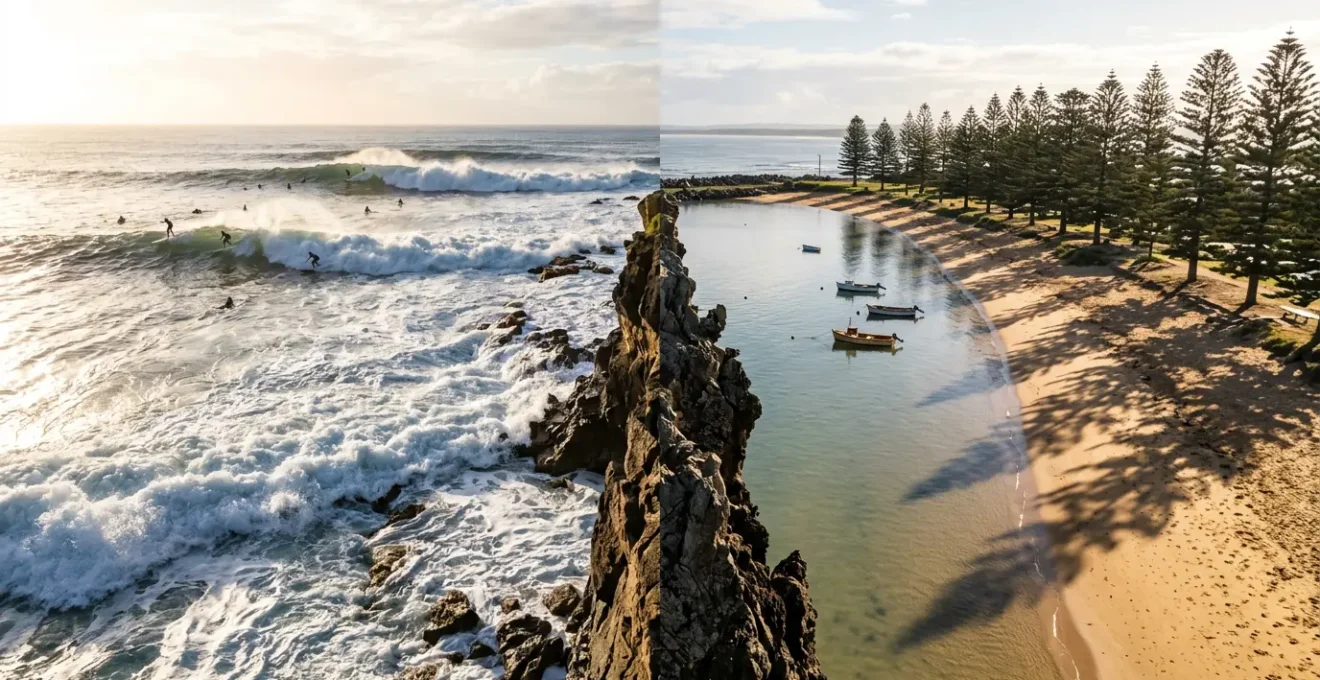
This paragraph introduces the visual concept of a hidden cove. To truly appreciate what this means, it is useful to visualize the scene. The illustration below captures the essence of what you might find just a short walk away from the main beach.
As this image shows, the reward for a little exploration is often immense. That golden morning light, the calm water, and the feeling of having a place to yourself is the real treasure. It’s not about avoiding tourists; it’s about finding your own space and connecting with the coast on a deeper level. This is the local way.
How to Join the Lineup Without Getting Yelled At by Locals?
Paddling out into a crowded surf break at a place like Bondi or Manly can be more intimidating than the waves themselves. You see a pack of surfers, all moving with an unspoken rhythm, and you have no idea how to fit in. This is where surf etiquette comes in, and it’s not just about being polite—it’s a critical safety system. The rules exist to prevent collisions and ensure everyone gets a chance to surf. Ignoring them is the fastest way to get a reputation and a sharp word from a local.
The most fundamental rule is about priority: the surfer closest to the peak (the part of the wave that breaks first) has the right of way. Paddling around someone to get into a better position, known as ‘snaking’, is a major offence. Equally important is not ‘dropping in’—taking off on a wave that someone else is already riding. Before you even think about catching a wave, look left, right, and behind you. Your first job is observation. Watch the lineup for 10-15 minutes. See who the regulars are, where the waves are breaking, and how the rotation works. Humility is your best friend out here.
As a beginner, your place is not at the main peak. Start on the inside, in the whitewater, or on the ‘shoulder’ of the wave where it has less power. You’ll catch more waves, have more fun, and stay out of the way of more experienced surfers. If you make a mistake, and you will, the solution is simple: a quick, sincere apology. Acknowledging your error immediately shows respect and defuses almost any situation. We were all beginners once.
- Observe First: Watch the lineup for 10-15 minutes before paddling out to understand the pecking order and wave patterns.
- Start Wide: Begin in the whitewater or on the ‘shoulder’ of the wave, far from the ‘peak’ where experienced surfers are.
- Wait Your Turn: Never paddle around other surfers to get closer to the peak. Let the natural rotation bring a wave to you.
- Look Both Ways: Before taking off, check your left and right to ensure you’re not dropping in on someone who has priority.
- Apologize Immediately: If you make a mistake, own it. A quick apology shows you understand the rules and are trying to learn.
SPF 50+ and Timing: How to Avoid Burn in the Australian Sun?
The Australian sun is no joke. It’s not the same sun you might be used to back home. Due to the country’s position and the clearer atmosphere in the Southern Hemisphere, UV radiation is significantly stronger here. Getting sunburnt is not just a painful inconvenience; it’s a serious health risk. We see more cases of severe sunburn and heatstroke on public holidays than almost any other injury. Thinking you can “get a base tan” is a dangerous myth. There is no such thing as a safe tan—it’s all just skin damage.
Your two best friends at the beach are timing and protection. The number one rule is to avoid direct sun exposure during peak UV times. As a general guide, the sun in Australia is at its most dangerous between 10 am and 4 pm. This is when locals are either indoors, under heavy shade, or have finished their beach time for the day. If you see a beach full of people baking in the midday sun, you can be sure they’re mostly tourists. For protection, think “slip, slop, slap, seek, slide”: slip on a shirt (a ‘rashie’ or rash vest is best), slop on SPF 50+ sunscreen, slap on a wide-brimmed hat, seek shade, and slide on sunglasses.
This photo shows the essential kit for any day at an Australian beach. It’s not about fashion; it’s about survival.
When it comes to sunscreen, not all are created equal, especially for time in the water. For surfers and serious swimmers, a thick, white layer of zinc is the gold standard. It forms a physical barrier that reflects UV rays, rather than a chemical one that absorbs them. It might not look glamorous, but it works, and it stays on.
This table breaks down the key differences between the two main types of sunscreen. It’s based on information from health authorities like Healthdirect Australia to help you make an informed choice.
| Feature | Chemical Sunscreen | Physical/Mineral (Zinc) |
|---|---|---|
| How it Works | Absorbs UV rays | Reflects UV rays |
| Water Resistance | Washes off easier | Stays on longer |
| Application | Clear, easy spread | Thick, visible layer |
| Reef Safe | Often harmful | Generally safer |
Fish and Chips vs Fine Dining: Where to Eat with a View?
After a few hours in the salt and sun, your appetite will be roaring. The classic Aussie beach meal is fish and chips, wrapped in paper and eaten on the sand, dodging seagulls. It’s a must-do experience at both Bondi and Manly. However, the food scene at Sydney’s beaches has evolved far beyond that. The choice isn’t just about what to eat, but about the kind of experience you want, from a casual picnic to a high-end client lunch.
The beauty of both Bondi and Manly is that they cater to every budget and taste, all with world-class views. You can grab a gourmet pie, a healthy açai bowl, or sit down for a multi-course meal at a celebrity-chef restaurant. The question is, what’s the smartest way to enjoy it? For a truly unique and local experience, the answer often lies within the very buildings dedicated to beach safety: the Surf Life Saving Clubs.
Case Study: Surf Club Dining, The Best View in Town
Surf Life Saving Clubs (SLSCs) and Returned & Services League (RSL) clubs hold some of the most valuable real estate in Australia, occupying prime beachfront positions. These community-run venues offer Sydney’s best-kept dining secret. The food is often simple, hearty, and affordable, but the views are priceless. More importantly, the money you spend goes directly back into funding the vital surf lifesaving programs and equipment that keep the beach safe. For business travelers, places like Bondi Icebergs or North Bondi RSL provide a relaxed, quintessentially Sydney setting for a client meeting. The spectacular ocean view becomes a natural talking point, breaking the ice and building relationships in a way no boardroom ever could.
Another great option that combines gourmet taste with a casual setting is the curated beach picnic. Instead of a restaurant, you source high-quality local produce—artisanal cheeses, fresh sourdough, regional wines—from a local deli and find a grassy spot on the headland overlooking the beach. This is particularly popular at sunset, when the day-trippers have gone home and the coastline is bathed in golden light. It offers the million-dollar view without the price tag, combining comfort, quality, and a deep connection to the location.
Ocean Swims and Coffee: Why the Australian Day Starts at 6 AM?
If you visit Bondi or Manly at 6 am, you’ll find they are already buzzing with activity. You’ll see runners on the sand, swimmers slicing through the ocean, and surfers paddling out to catch the first waves of the day. This isn’t just about fitness fanatics; it’s a deep-seated part of Sydney’s culture. The early morning is a magical time on the coast. The wind is often calm, the water is glassy, the crowds haven’t arrived, and the rising sun puts on a spectacular show. For many locals, this pre-work ritual is non-negotiable.
This “dawn patrol” culture is about more than just exercise. It’s about starting the day by connecting with nature, clearing your head, and energizing your body before the demands of work kick in. It sets a positive tone for the entire day. After the swim or surf, the second part of the ritual begins: the coffee. The beachfront cafes are packed by 7 am with people in wetsuits or still dripping salt water, grabbing their flat whites and chatting with friends. This post-swim coffee is where community happens.
What visitors often miss is that this is also a powerful form of networking. It’s where deals are discussed and connections are made in a relaxed, informal setting. As the Sydney Business Culture Observer from the Bondi Salties Swimming Group notes:
The pre-work surf or swim is a huge part of Sydney’s professional networking culture, a ‘third space’ where deals are discussed and connections are made before the workday officially begins.
– Sydney Business Culture Observer, Bondi Salties Swimming Group
This blending of wellness, community, and business is uniquely Australian and is exemplified by groups that have sprung up around this ritual.
Case Study: The Bondi Salties, Networking in Boardshorts
Meeting every Friday at 6:15 am, the Bondi Salties have become one of Sydney’s largest and most influential informal community groups. This free-for-all combines a soft sand run with a 1.3km ocean swim, followed by coffee. What began as a simple fitness routine has evolved into a major networking hub for executives, entrepreneurs, and creatives. They connect in boardshorts and bikinis before heading to their respective offices, proving that in Sydney, some of the most important professional relationships are built on a shared love for the ocean, not in a boardroom.
How to Keep Food Fresh and Drinks Cold in 35-Degree Heat?
A day at the beach in the Australian summer means dealing with serious heat. It’s not uncommon for beach temperatures to regularly reach 35°C (95°F), and the sand can get much hotter. Keeping your food safe and your drinks cold isn’t just a matter of comfort; it’s a matter of health. Food poisoning from a warm egg sandwich or dehydration from not having cool water can ruin your day and your trip. The humble ‘esky’, or cooler, is an essential piece of Australian equipment, but using it effectively is a science.
The key to a successful esky is preparation. You can’t just throw warm drinks and some ice in and hope for the best. The goal is to create a stable, cold environment that lasts for hours. This starts the night before. Pre-chilling your esky is the number one pro-tip. Leaving it open in a walk-in freezer or filling it with a ‘sacrificial’ bag of ice overnight drops its core temperature, meaning your fresh ice will last much longer on the day.
Another crucial tip is to use large, solid blocks of ice rather than small cubes, as they melt much slower. The best ice blocks are free: frozen water bottles. They serve a dual purpose, keeping everything else cold and then providing you with ice-cold drinking water as they melt. When packing, think strategically. Drinks go at the bottom, as they are hardiest and benefit from the coldest temperatures. Delicate foods like salads and sandwiches go on top, away from the direct cold and any potential meltwater. Following basic food safety, like the 2-hour/4-hour rule (food left in the temperature danger zone for over 4 hours should be discarded), is also critical.
Your Esky Masterclass Checklist: Pro-Level Cooling
- Pre-chill: Did you pre-chill your esky overnight with ice or by placing it in a cold room?
- Ice choice: Are you using large block ice or frozen water bottles instead of fast-melting party ice?
- Strategic Layering: Have you placed drinks at the bottom and delicate foods on top?
- Minimize Air: Have you filled empty spaces with towels or extra ice to reduce air circulation and melting?
- Food Safety Check: Are you aware of the 2-hour/4-hour rule for any food that has been taken out of the esky?
Key takeaways
- Always observe the water for 10 minutes before entering to identify rip currents; if in doubt, stay out or swim between the flags.
- Respect surf etiquette as a crucial safety system: wait your turn, don’t drop in, and start on the shoulder of the wave as a beginner.
- The Australian sun is extremely strong; use SPF50+ zinc, wear a hat and rash vest, and avoid direct exposure between 10 am and 4 pm.
How to Experience Australian Nature Without endangering Yourself or the Environment?
The incredible natural beauty of Australia’s coastline is both a privilege and a responsibility. The vibrant marine life and pristine environment are what make these beaches so special, but they also come with inherent risks and require our respect. Experiencing nature here is about finding a balance: enjoying it to the fullest while ensuring your safety and leaving no trace. This mindset is the final piece of the puzzle in truly understanding local beach culture. It’s about being a guardian, not just a visitor.
Personal safety involves being aware of the local marine life. While serious incidents are rare, encounters with creatures like bluebottle jellyfish or stingrays can happen. The key is prevention and knowing the correct response. Shuffling your feet when walking in shallow, sandy water can scare away stingrays buried in the sand. Checking for beach warning signs about jellyfish before you swim is a simple, effective precaution. Knowing basic first aid—like using hot water for most stings—is also essential. The following table provides a quick reference for common encounters.
Here’s a quick guide to some of the marine life you might encounter, based on advice from official sources like Healthdirect Australia.
| Marine Life | Risk Level | Treatment | Prevention |
|---|---|---|---|
| Bluebottle Jellyfish | Common, painful sting | Hot water or ice pack | Check beach warnings |
| Stingrays | Rare but serious | Hot water, call 000 if chest/abdo | Shuffle feet in shallow water |
| Seaweed masses | No risk | None needed | Sign of healthy ocean |
Environmental responsibility is just as important. The principle is simple: leave the beach cleaner than you found it. This means taking all your rubbish with you and even picking up a few extra pieces left by others. This ethos is perfectly captured by a popular local initiative.
Take 3 for the Sea: picking up three extra pieces of rubbish every time you leave the beach.
– Take 3 for the Sea Initiative, as promoted by Waverley Council
This small act, when done by many, has a massive impact on the health of our oceans. It’s the ultimate sign of respect for the environment you’ve come to enjoy.
Ultimately, choosing between Bondi and Manly is just the beginning. The real journey is learning to carry this awareness with you to any coastline. By learning to read the water, respect the sun, understand the etiquette, and protect the environment, you’re not just ensuring your own safety—you’re becoming part of the culture. Start today by adopting this mindset of situational awareness and make it the foundation of every beach visit.